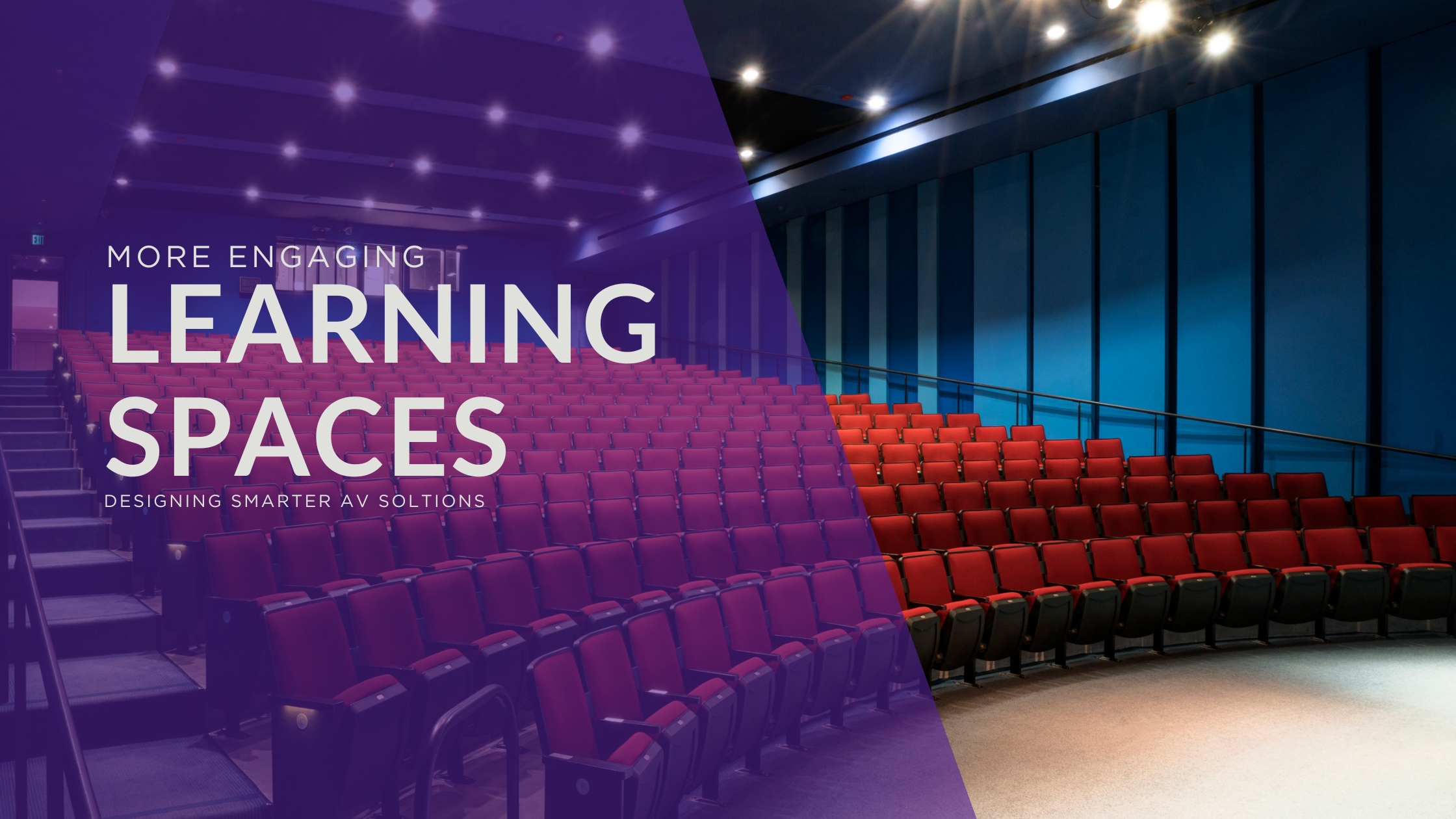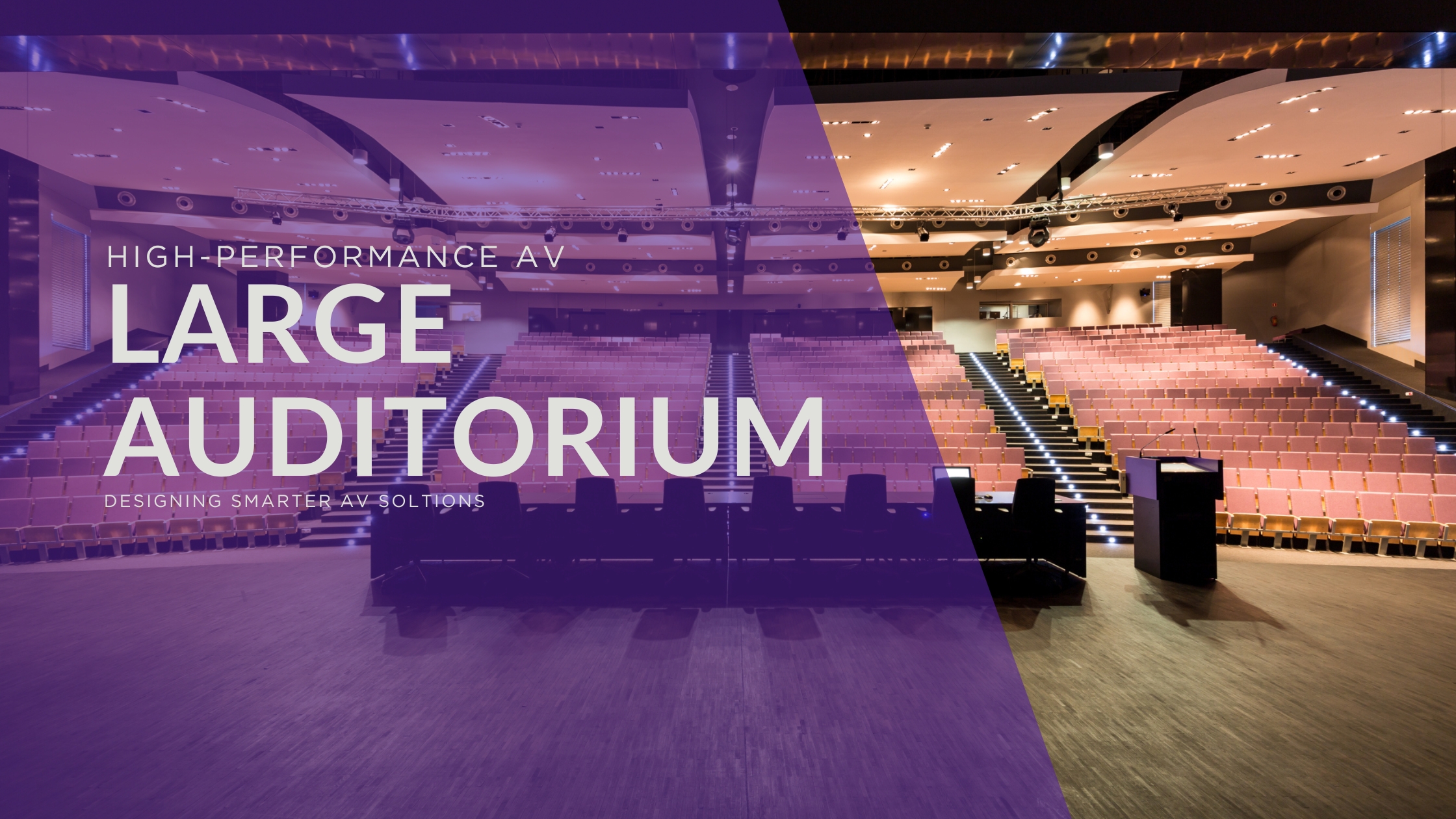
Auditorium AV systems are essential because auditoriums host some of the most significant events on campus and within communities—from graduation ceremonies and keynote lectures to theatrical performances and public forums. Creating an immersive experience for every attendee requires more than a stage and a projector. Professional AV systems deliver clear sound, large-format visuals, intelligent lighting and seamless integration with streaming platforms, ensuring the space supports diverse events and audiences.
Research from professional audio manufacturers shows that line-array speaker systems, which stack multiple modules vertically, project sound evenly across large rooms and reduce volume drop-off for distant seats. This consistency is essential for auditoriums where audience size, seating layout and acoustic conditions vary widely.
This guide covers the essential components of an auditorium AV system, key design considerations and the cost factors to expect when planning an upgrade or new installation.
Why Auditorium AV Matters
As one of the largest gathering spaces in an institution, an auditorium must support high intelligibility, strong visual impact and hybrid participation. The right AV system:
Delivers intelligible sound to every seat
Distributed speakers and digital signal processing help ensure both the front row and the balcony hear clearly. Uniform audio coverage is essential for speeches, performances and panel discussions.
Provides stunning, large-format visuals
LED video walls or high-brightness projection systems allow all attendees to see slides, videos and live camera feeds with clarity.
Supports streaming and remote participation
High-quality PTZ cameras and conferencing tools enable hybrid events and allow audiences to join from anywhere.
Adapts to multiple event types
The system should support lectures, theatrical productions, corporate presentations and community gatherings without major reconfiguration.
Key Components of an Auditorium AV System
1. Displays
Large-format LED walls or high-brightness projectors offer the clarity and scale needed for expansive spaces. Proper brightness and pixel pitch ensure visuals remain sharp, even under stage lighting.
On-stage confidence monitors help presenters maintain flow without turning away from the audience.
2. Audio
A robust audio system is the backbone of any auditorium. This typically includes:
- Advanced line-array speakers for even sound distribution
- Subwoofers and amplifiers for full-range audio
- Directional microphones for presenters, performers and panelists
- Assistive listening systems for guests with hearing impairments
Professional guides, such as the one from T.I Audio, explain that line arrays provide improved clarity, controlled dispersion and scalable configurations suitable for different venue sizes.
Digital mixers and DSPs balance microphones, instruments and playback sources, ensuring high intelligibility and reliable performance.
3. Lighting and Staging
Stage lighting systems highlight presenters, enhance performances and visually direct the audience’s attention. Intelligent fixtures, dimmers and preset scenes allow operators to adapt lighting for different event formats.
Acoustic treatment—including diffusers, wall panels and overhead baffles—improves speech intelligibility and enhances musical clarity by controlling reflections and reverberation.
4. Video Conferencing and Streaming
High-definition PTZ cameras capture the stage and audience for recording, live-streaming or hybrid participation. Streaming integration allows events to reach remote attendees or be archived for future viewing.
5. Control Systems
Centralised touch-screen control panels simplify operation. Users can switch inputs, trigger lighting scenes, adjust audio levels and start recordings—all without technical expertise. Preset modes ensure consistent performance across event types.
Design Considerations
1. Flexibility for Multiple Event Types
Auditoriums must support everything from lectures to dramatic performances. Movable lecterns, adaptable lighting and multiple input locations help make the space more versatile.
2. Accessibility and Inclusivity
Assistive listening devices, closed-captioning systems and well-placed screens ensure all attendees—including those with hearing or visual impairments—can fully engage.
3. Professional Aesthetics
Discreet speaker placement, concealed cabling and tidy equipment racks maintain the architectural beauty of the space while preserving easy access for maintenance.
4. Sightlines and Acoustics
Good auditorium design ensures that every seat has an unobstructed view of the stage and displays.
For acoustics, the use of acoustical shells, overhead “clouds” and shaped walls to improve projection, control reflections and ensure performers can hear each other. These features are critical for multi-purpose venues.
Industry Insights and Further Reading
To explore professional audio solutions further, T.I Audio’s line-array guide explains how stacked modules create a cohesive wavefront, improving clarity and consistency across large venues.
For design inspiration, Wenger Corporation’s Performance Spaces Planning Guide details how acoustical shells, ceiling treatments and architectural shaping support more expressive, intelligible performances.
Reviewing these resources can help you plan an auditorium that delivers exceptional acoustics, visibility and flexibility.
Budgeting and Cost Considerations
Auditorium AV budgets vary based on room size, design complexity and desired system capabilities. Key cost drivers include:
Room size and acoustics
Larger rooms require more speakers, amplifiers and acoustic treatment to maintain consistent coverage. Providers such as Soundtrack.io offer tools to estimate speaker requirements and placement.
Display technology
- LED walls: Higher upfront cost, superior brightness, long lifespan.
- Projection: Lower initial cost but ongoing maintenance and lamp replacement.
Lighting and staging
Theatrical lighting rigs, intelligent fixtures and motorised bars add cost but dramatically improve production quality.
Infrastructure
Conduits, cabling, racks, power distribution and networking are essential and should be included in early budgeting.
Professional installation and calibration
Hiring qualified integrators ensures correct speaker aiming, tuning, rigging safety and long-term reliability.
Maintenance and staff training
Budget for ongoing servicing, firmware updates and training so staff can operate the system confidently.
Investing in a well-designed system reduces long-term costs by avoiding premature replacements or performance issues.
Choosing the Right Partner
The success of an auditorium upgrade depends on working with an experienced integration team.
AVPartners provides end-to-end auditorium AV solutions, design, equipment specification, installation, automation and ongoing support. Their systems prioritise clear visuals, exceptional audio and seamless hybrid-event integration.
Ready to upgrade your auditorium?
Explore our auditorium AV installation services or contact us to arrange a site assessment.