Tag Archive for: audiovisual

Entertainment performs for conference attendees

Conferences are evolving rapidly. Attendees expect more than traditional lectures; they want immersive, personalised experiences that reflect modern technology and culture. In 2026, successful conferences use innovative formats to keep audiences engaged and inspired.

Multi‑sensory experiences

Engaging all five senses has become a priority. Research shows that sensory‑rich events increase emotional connections and memory recall. Event planners are using dynamic lighting, LED walls and projection mapping to transform conference spaces. Curated playlists and live musicians set the mood, while themed menus and interactive food stations add flavour. Textured linens, hands‑on installations and premium giveaways provide tactile stimulatio. Even scent is considered, subtle fragrances or fresh flowers create inviting aromas. Balancing these elements ensures the sensory experience complements your message without overwhelming attendees.

Seamless day‑to‑night events

Binary events, where conferences transition into evening networking dinners, are gaining popularity. Instead of moving attendees to another venue, organisers convert the same space from daytime sessions to gala dinners. This approach reduces logistical costs and keeps guests engaged. By refreshing floor plans, lighting and décor, planners reignite energy and create an evening atmosphere. Day‑to‑night events also allow for creative programming: daytime workshops and keynote presentations followed by live entertainment, awards and socialising.

Hybrid conferences and global reach

Hybrid events, which blend in‑person and virtual participation, remain vital. Surveys predict that 70 % of events will include hybrid components. Live streaming lets people join from anywhere and extends your event’s impact; professional platforms provide adaptive bitrate streaming, analytics and secure delivery. Hybrid conferences also allow you to record sessions for on‑demand viewing and build communities beyond the event date. For a reliable hybrid solution, explore Virtual & Hybrid Event Services by AVPartners.

Hyper‑personalisation and micro‑experiences

Attendees expect events tailored to their interests. According to industry forecasts, hyper‑personalised journeys will dominate conferences. Registration processes now collect preferences to create customised agendas, targeted notifications and personalised networking opportunities. Smaller group activities, roundtables, cohort discussions and identity‑based meetups, give people meaningful connection. AI‑powered matchmaking tools pair attendees with similar interests, while micro‑events deliver niche content within the larger program.

Digital immersion and emerging tech

Event technology is pushing boundaries with augmented reality, virtual reality, holograms and drones. Immersive virtual worlds and multi‑camera live production enable participants to explore digital environments and interact with remote speakers. Drones capture unique footage and add drama during opening ceremonies or evening entertainment. Holograms and mixed‑reality displays bring speakers or products to life. Gamified interactions, such as mobile scavenger hunts or AR quests, keep guests engaged throughout the conference.

Sustainability and wellness

Conferences in 2026 place greater emphasis on sustainability and wellbeing. Planners reduce waste by eliminating single‑use materials, sourcing local food and partnering with eco‑friendly suppliers. Wellness breaks, yoga sessions, meditation rooms or outdoor walks, help attendees stay focused and recharge. These elements reflect broader societal values and leave a positive impression on delegates.

Conclusion

Staying up to date with conference trends means embracing technology, creativity and human connection. By designing multi‑sensory experiences, creating seamless day‑to‑night transitions, offering hybrid participation, personalising attendee journeys and incorporating immersive tech, you ensure your conference stands out in 2026.

For support with cutting‑edge event technology and creative design, explore AVPartners’ Conference and Event and Multimedia Production services.

Hybrid seminar with in‑person attendees and virtual participants.
Planning a seminar requires more than booking a room and inviting a speaker. A structured timeline helps you lock in venues, talent and technology while giving your team enough time to market the event and create an engaging experience. The length of the planning cycle depends on the scale of your seminar. For large corporate events you may need nine to twelve months of lead time, while smaller pop‑ups can be organised in six to eight weeks. Regardless of size, working backward from your target date ensures you cover all key milestones.

Below is a recommended timeline for seminars in 2026. It covers the period from six months out to the day before the event. While every seminar is unique, these stages provide a solid framework to help you deliver a polished, professional event.

Six months prior: establish goals and secure the basics

Start by assembling your planning team, setting goals and KPIs, and defining your audience. Decide why you are hosting the seminar and what attendees should take away from it. Next, secure a venue that meets your capacity and technical needs. Early venue selection ensures you have the space you need and can negotiate favorable rates. Set a provisional budget and allocate funds across categories such as venue hire, audiovisual production, catering and marketing. Begin researching and contacting potential speakers or subject‑matter experts.

This is also the time to investigate hybrid or virtual options. If you plan to stream part of your seminar, confirm that the venue has robust internet and identify a virtual and hybrid event service provider to supply streaming technology. Setting these foundations early reduces the risk of last‑minute surprises.

Three months out: confirm speakers and vendors

Three months before your seminar, finalise key agreements with your venue, production partners and vendors. Confirm your speakers, align on topics and secure all technical requirements. Send save‑the‑date notifications to prospective attendees. Finalise your seminar’s creative direction, including signage, branding and décor. Secure permits and insurance if necessary and develop your event marketing calendar.

Decide on your seating style, whether interactive roundtables or classroom‑style row and coordinate with the venue on setup and pack‑down requirements. Ask your speakers if they need handheld or lapel microphones, how many screens they require and whether they prefer physical or digital slides. This is also a good time to launch your event website or registration page. If you need help with room layouts or audiovisual design, explore AVPartners’ Event and Conference Solutions, which cover audio, vision, staging and lighting for seminars of any size.

One to two months out: fine‑tune details and promote

With around eight weeks to go, send formal invitations and open registration. Confirm catering arrangements and accommodate dietary requirements. Finalise your run of show and production schedule, and confirm equipment needs with vendors. Schedule a walk‑through of the venue with key staff, including your AV team, to address any last‑minute concerns. Order printed materials such as name badges and signage.

One month before the seminar, confirm RSVPs and seat assignments. Hold internal logistics meetings, review scripts, cue sheets and the agenda, and finalise staff briefings. Assemble onsite kits with registration supplies and emergency items. Double‑check all vendor details, arrival times and load‑in plans. As you finalise your marketing, highlight keynote speakers or special sessions on social media.

Two weeks to one week out: confirm and communicate

Two weeks before the seminar, confirm all external parties—AV suppliers, caterers, decorators and speakers. Send them the final event runsheet and check if they have any questions. Confirm shipping and delivery arrangements for materials too large to carry personally. One week out, verify final headcounts with the caterer and distribute the final production schedule. Hold a pre‑event call with your internal team and all vendors to clarify arrival times, access codes and parking. Pack supplies, staff materials and backups, and prepare any signage or place cards for installation. Schedule last‑minute promotional emails and social posts.

The day before: final checks and packing

The day before your seminar, write a checklist and pack everything you need—name badges, printed programs, presentations on USB drives, stationery and any props. Make sure you have several copies of your agenda and runsheet for staff and suppliers. Bring registration materials such as guest lists, name badges and place. Check weather forecasts and travel routes, and confirm that your AV team has all presentations loaded and tested. A final run‑through helps everyone visualise the event flow and ensures there are no gaps.

Conclusion: planning ahead leads to success

Creating a seminar timeline provides clarity, keeps stakeholders aligned and ensures you hit every milestone. By starting six months out with goal setting and venue selection, confirming speakers and vendors three months prior, fine‑tuning details in the weeks leading up to the event, and packing carefully the day before, you set yourself up for success. In 2026, hybrid event capabilities and sustainability considerations add extra layers to planning, so work closely with your audiovisual partner to incorporate streaming and environmentally friendly practices from the start. AVPartners’ expertise in event technology and virtual and hybrid services ensures your seminar runs smoothly, whether on site or online. To discuss your seminar needs or explore custom AV solutions, contact us today.


Modern presentations need to do more than deliver information. They must capture attention, encourage interaction and inspire lasting memories. Research shows that active learning, which involves participation and discussion, improves attentiveness and knowledge retention compared with passive listening. To make your next speech, seminar or workshop stand out, consider three technology-driven strategies that help presenters create meaningful and interactive experiences.

1. The Medium is Still the Message: Use the Right Tools

If the medium shapes the message, it is time to look beyond static slide decks. Interactive tools such as live polling apps, digital whiteboards and Q&A platforms invite the audience to become part of the conversation. Engagement thrives when communication moves from one-directional delivery to a dynamic exchange. Engaged audiences ask questions, react to ideas and absorb information more deeply. Studies show they are also more likely to remember key points and enjoy the experience.

Live polls and quizzes

Real-time polling lets speakers gauge opinions and adjust content as needed. Polls also break up slide-heavy presentations and ensure every participant has a voice.

Interactive Q&A platforms

Tools such as Sli.do or Poll Everywhere allow attendees to submit questions anonymously. This removes barriers for shy participants and encourages more inclusive dialogue.

Diverse media formats

Short videos, animations or graphic recordings can help re-engage audiences when attention begins to drift. Educational research supports the use of videos designed to manage cognitive load and increase understanding.

2. Ditch the Paper: Present with Tablets and Apps

Printed notes can slow you down and break your connection with the audience. Tablets offer a modern, polished alternative. Presenter Corey Quinn found that switching to an iPad improved mobility, eliminated the need for printed notes and provided a reliable backup if a laptop failed. He also noted that an LTE-enabled tablet removed dependence on venue Wi-Fi.

Presentation software

Apps such as Keynote, PowerPoint and Google Slides allow you to edit and present wirelessly. Cloud storage ensures your files remain accessible from any device.

Cueing and annotation apps

Digital note tools help you scroll through speaker notes, highlight key ideas and maintain eye contact with your audience.

Remote control tools

A Bluetooth remote enables natural movement on stage. Quinn recommends investing in a reliable remote for smooth slide transitions.

Tablets also signal a forward-thinking, environmentally conscious approach. A visual suggestion here would be a photo of a presenter confidently using a tablet instead of printed cue cards.

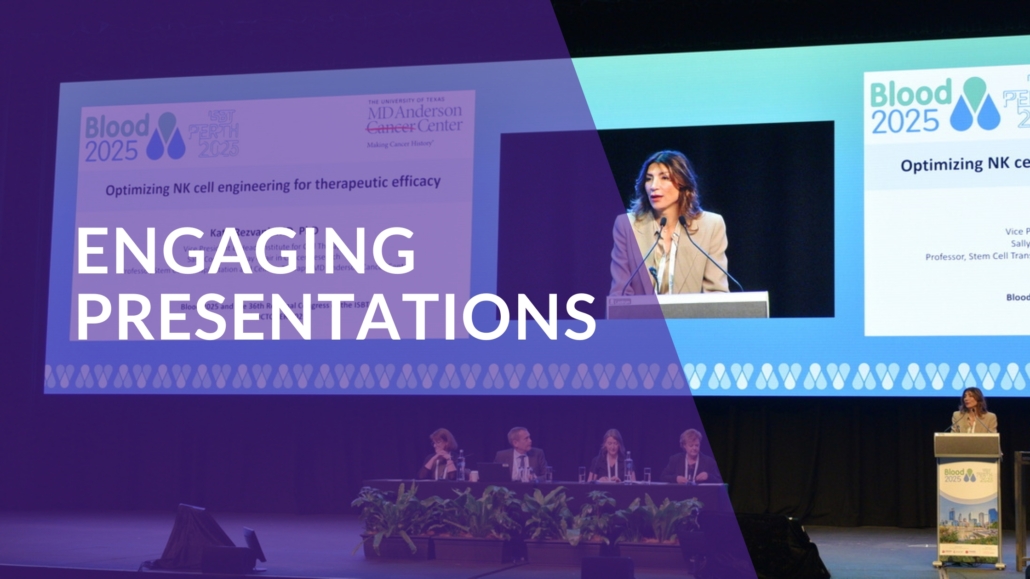
technology for engaging presentations in action at PCEC

3. Turn Audiences into Participants

Technology has changed how audiences interact before, during and after presentations. Event apps, live polling and social media allow attendees to become active participants.

Social media engagement

Encourage live tweeting with an event hashtag and show the feed on screen. Real-time sharing builds excitement and expands the reach of your session.

Audience response systems

Clickers or app-based response tools let attendees vote, answer questions or react instantly, keeping energy levels high.

Interactive event apps

Many conference apps include integrated polling and Q&A functions. Consult your AV team to learn which tools are available at your venue.

Workshops and networking

Small-group activities help attendees apply new ideas and connect with one another. These moments increase engagement and strengthen learning outcomes.

By planning engagement across all stages of the presentation, you transform passive listeners into active contributors. Interactive elements should always reinforce the message rather than distract from it.

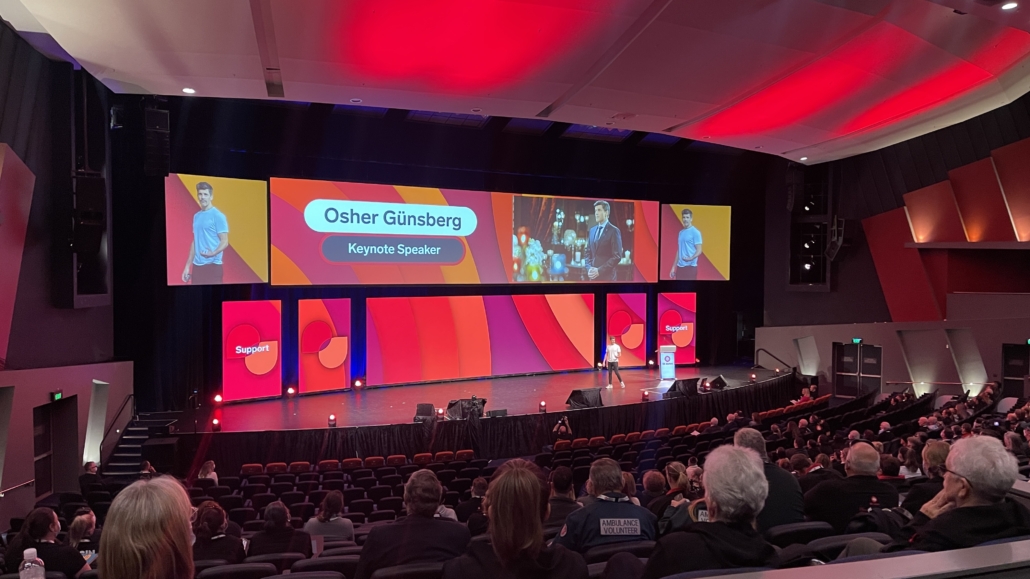
Osher Gunsberg, using technology for engaging presentations

Final Thoughts and Next Steps

When used thoughtfully, technology can turn a standard presentation into a memorable, interactive experience. Interactive tools encourage active learning and increase retention. Tablets streamline delivery and create a modern impression. Social media and audience response systems turn your talk into a conversation rather than a monologue.

To ensure everything runs smoothly, consult our event staging and audiovisual team well in advance. They can recommend the right tools, integrate them into your setup and provide on-site support.

If you are ready to rethink your next presentation, explore AVPartners multimedia services to discover how we can help you design engaging, technology-driven sessions that resonate with today’s audiences.

Contact Us Online & Hybrid Event Services Online Event Production Services

Live streaming has become a craze ever since the pandemic of Covid-19 has forced event organisers into alternative ways of holding their events.

The capability of live streaming has become hugely popular in recent years, especially for events that attract global attention. Live streaming offers people the opportunity to experience events, even if they can’t be there in person.

Perhaps you’ve considered live streaming your event, but you’re not entirely sure if it’s the right thing to do. Maybe you’ve thought, “Well, it could be great exposure, but then again who will purchase a ticket if it’s going to be live streamed for free?” This is a very sensible question to ask. Although there are many benefits to live streaming events, it’s important to consider whether it is right for your event. Some events thrive on exclusivity. Keeping an event exclusive might help with setting ticket prices, selling tickets, or attracting thought leaders. These events might benefit from being kept intimate instead of being live streamed. But for many events, especially ones that have an objective of broadcasting information or selling a certain product or service, live streaming can be greatly beneficial. Here’s why:

Maximise your exposure

Live streaming, especially via social media can help build exposure for your event. Your event can be live streamed to your social media audience, but it can also reach a larger audience if the content is shared and interacted with online. Live videos tend to attract more online engagement compared with other types of content. They incite a sense of urgency, compelling people to watch. When you share your live stream to social media, you also have the option of running ads in order to reach an even wider audience.

Use data to improve your events

When you live stream your event, it gives you the opportunity to learn more about your audience through online data. Bringing your event online can help you gather important information about who your audience is and what they like (or dislike) about your event. Whether you’re live streaming on your website or social platforms, you have access to data on who is engaging with your content. This information can help you make improvements on your event next time around.

Provide a channel of communication for your audience

If you’re broadcasting your event on social media, your live stream will give your event goers and online audience a platform to interact with you while the event is running. It gives them the opportunity to ask important questions about keynote speakers, products being launched or whether there are follow up events.

When you’re live streaming a corporate event, it’s important to get it right. The last thing you want is a major disruption or delay in the audio or video. When you do it yourself there are many risks involved that can disrupt the smooth running of your event. Make sure to hire a professional audiovisual team to do all the hard work so that you don’t have to. At AVPartners we have the right technology and expertise to broadcast your event so that you can rest assured that it’s done the right way.

Get in touch with us today about your next live streamed event.

Contact Us Online & Hybrid Event Services Online Event Production Services

User generated content is an easy way for brands and companies to expand their marketing reach with little to no hands-on effort. With the prevalence of social media, companies can easily share content that their audience creates. The power of this is that their audience effectively becomes an endorser for the company, without payment having occurred. This also means the company gains trust amongst its audience.

So how can you translate this to encourage user generated content at your next event? Here are 8 tips.

Create a hashtag

Create a relevant hashtag with your delegates prior to the event and if it’s annual, make sure you include the year so your delegates don’t accidently post about a different event. For example, if you are hosting the National Safety Conference 2019, your hashtag might be #natsafetyau19.

Create a social media wall at your event.

This consists of a large screen, or wall that you can project onto and is linked to popular social media feeds like Instagram, Facebook and Twitter. The wall should focus on your event hashtag or handle and see all the pictures, tweets and status updates your delegates are posting live throughout the event.

Create a selfie wall

Different to a social media wall, this consists of a physical frame or backdrop featuring your event hashtag, theme colours and anything else that will clearly identify your event. Attendees can then take a selfie with the frame to add to their own social media pages. As added incentive to take a selfie, you may wish to allocate certain times your delegates can get a photo with a superstar speaker. Having the chance to get a picture with an expert in their industry is a great incentive to get involved, and effectively promote your event.

Run a contest

This is a fun way to encourage your attendees to upload their own pictures and videos of the event. You could run the competition like a treasure hunt and the first person to post a photo of a certain exhibition stand, for example, could win free tickets to next year’s event. If you change the competition frequently enough, this will encourage your attendees to continue posting photos and videos for their chance to win.

Create an interactive conference program

Encourage your attendees to get up and take part during the presentations. Whether it be by sharing their opinion alongside an industry expert or running a roundtable, give your attendees a reason to take pictures or videos and connect with one another. This is the perfect opportunity for the ‘humblebrag’ where you delegates can say “look where I am and look what I did.”

Theme your event

Theming allows you to create interesting concepts, images, colours and shapes that your attendees are bound to want to take photos of. If you choose to have a theme, you can promote it through your audiovisual elements, dress code, invitations, programs, marketing, decor, entertainment, food and music. For example, an Alice in Wonderland theme might include a big screen with a looped video of Alice falling down the rabbit hole. Your tables could have teacups and red roses as centrepieces.

Hire awesome entertainment

Impressive entertainment can really set your event apart from the rest. By choosing highly visual or sound focused entertainment, you can give your attendees something to video or take photos of. You might consider hiring comedians, puppeteers, magicians, dancers, trapeze artists, balloon artists or DJs. Encourage your attendees to share the photos or videos they take on your social media pages to get the word out.

Leverage influencers

If you have held your event previously, you will already have social media followers. Turn these followers into influencers by encouraging them to write a review on your social media page about their favourite part of the event. Sharing their feedback is a great way to encourage new people to attend and shows your past attendees you value their thoughts and opinions. This feedback can also help you learn and create a better event.

AVPartners is an in-house audiovisual specialist for hotels and event venues around Australia. We can help to bring your event alive with a theme and can support the technical needs of your event. If you would like help encouraging user generated content at your event, contact us today.

One of the biggest challenges when hosting an event is ensuring you have enough guests attending to make the event worthwhile. Here are 5 tips that can help you to boost your numbers at your next conference, without the last minute ‘free-ticket’ scramble.

Consider the timing of your event

It’s important to do careful research when considering what time of year to hold your conference. To encourage guests to attend, ensure there are no other competing conferences, events or holidays that may draw your delegates away from attending.

To avoid conflicting events, the first step is to conduct some research looking for other conferences, awards ceremonies and gala dinners that may be of interest to the industry. Take note of when they are being held and when there are reasonable gaps.

Secondly, think about busy holiday periods, like summer when people are inclined to travel and also any holidays that are industry specific, for example bank holidays for those in finance or school holidays for educators. Steer clear of those.

Next, consider how long you want your event to run for. While you may have a lot of content to cover, it may not be practical to host a week-long affair. You will need to consider the cost of venue hire and how much time your potential delegates are likely to get off work.

Offer early bird pricing and reward last year’s attendees

If this is an event you have held previously, an easy way to encourage attendees to register is to offer a returning delegate discount. This is a good starting point to gauge early interest in your event.

You may also wish to offer discounts for colleagues working at the same company. For example, if two delegates from the same company register (at the same time), a third can come for free!

Alternatively, ‘early-bird’ pricing for keen attendees who register far in advance is another way to draw a baseline of expected numbers. If you get good takeup for your early bird pricing, either your discount is too good to refuse or your attendees believe you really have something exciting and important to share.

Invite a high profile speaker or entertainer to present

Whether it be a celebrity in the industry or an actual Hollywood celebrity, getting a notable person involved in your event is sure to boost event registrations as your attendees want the opportunity to see and meet this high-flyer.

Remember that high flyers may ask for payment to be involved in your event, so if you plan to go down this route, make sure you factor that in to your budget.

They may also only be available at certain dates or times, so either consider this when choosing a date to host your event or make sure that your agenda is flexible.

Use reputable suppliers for your catering, audiovisual and venue needs

Choosing well-known suppliers for all your event needs, demonstrates the professional calibre of your event.

Some suppliers work in-house, like AVPartners, so they have strong knowledge of the venue you have hired and will be well connected with staff. This means aspects around setup may be integrated, creating a more cohesive event. For example, if you are choosing to have a theme, the way the room is dressed and the lighting and sound utilised to reflect this theme will be in sync.

Having a strong understanding of the venue is particularly useful for audiovisual suppliers as they will know the quirks of lighting and sound inside your chosen venue. With strong venue knowledge, they can set your lighting at the appropriate height and sound at the appropriate level to achieve best results.

Likewise, if you have any type of query, it’s easier to be pointed towards the right staff member who can assist. Using seasoned suppliers also means you have strong support should something go wrong.

Promote your event using social media

Social media has the ability to reach far and wide very quickly. It’s easy to create a social media page advertising your event and have interested people share this and talk about it. People are far more likely to be interested in an event if their friends are attending.

It’s worthwhile encouraging attendees to get involved in a conversation on social media as a way to promote the event. Or better still, provide your attendees with a ‘sneak peek’ of what they can expect to see at the event. Perhaps a short video of a speaker or photos from a past event. This is a great way to create excitement around your event and it’s easy content for your attendees to share and hopefully entice others to register.

AVPartners are the in-house audiovisual specialists for a range of hotels and event venues across Australia. Contact us so we can assist you to boost your delegate numbers at your next conference.

Planning and executing an event can be an exciting, yet very busy time. Most require months of preparation and strong plans in place to achieve the best outcome. However, from time to time even the most seasoned of event planners can face challenges.

So, what are some common event planning mistakes and how can you avoid or overcome them?

Poor communication

As an event planner, a key responsibility is to know what is going on across your internal team and external parties like suppliers and event speakers and attendees. However, if you don’t communicate clearly to each relevant group what you are expecting from them, then it’s likely that mistakes will be made as each member of your event delivery team will be unsure of their responsibilities.

The best way to overcome this challenge is to make a runsheet – this is a clear breakdown of what should be happening throughout the event and who will be completing each task. It must include times to start and finish certain tasks and should have the contact details of key members of the event delivery team so that each member of the team knows who to speak to if they have questions.

Lack of clear signage

Don’t have your event attendees running late for their favourite speakers or preferred sessions because they can’t find where a certain presentation is being given. The best way to overcome this challenge is to make sure each room is clearly signposted and there are clear directions to other spaces. Digital signage can assist with this as you can use one screen to give multiple directions and even feature moving maps, directing event attendees to main events like keynote speaker sessions or lunch.

Leaving equipment rental to the last minute

So you’ve organised the big ticket items like screens, projectors, lights and staging, but what about handheld microphones, lapel microphones and laser pointers? These are often requested by speakers. It’s tempting to only put in an order once you know what you require to avoid excess spending, but your AV suppliers will likely be working on many events at once and may not have excess inventory to accommodate your last minute requests. Plan in advance and order a few things, despite what your speakers may need, so you don’t miss out.

Not allowing enough time for setup

One of the biggest areas that event planners overlook is underestimating the amount of time it takes to set up their event. Event setups often take longer than anticipated as challenges generally will arise and you might have to make changes. The best way to avoid running out of time is to include setup time in your runsheet and always add more time for setup than you think you will need. It’s better to have excess time and be relaxed before your event starts than running around at the last minute. You must contact your suppliers at least 48 hours before the event to confirm what time they will be arriving and ask if they have any questions you can solve beforehand. Doing this can help to  speed up your setup on event day.

Forgetting to anticipate that problems will arise

Even the most seasoned of events organisers know problems will arise on the day. It’s Murphy’s Law! The best way to avoid this is to make contingency plans, anticipating what might go wrong. Make sure you have extra copies of programs, ensure a speaker has sent their presentation through ahead of time in case they leave their USB at home, give any materials you shipped a few extra days to arrive, check, double check and triple check how the technology works, order extra food and make a packing list. If you have a checklist of all the things you need, you will be less likely to leave anything behind.

Sometimes mistakes happen and this can be stressful. But if you are prepared, this can help lessen the blow and make your event appear smooth, professional, and seamless despite how you may be feeling inside. If you would like help with your next event, contact us today.

Whether you’re delivering a keynote speech, running a seminar, or doing a panel discussion, it is likely that your top priority is to keep your audience engaged. Without an engaged audience, your messaging simply will not cut through. Luckily there are many ways to make your presentations more engaging.

In addition to using humour, the right body language, and practicing over and over in front of the mirror,  there are a few ways to ensure your presentations grab the attention of your audience and keep them engaged. Here are a few:

Be a storyteller

People engage with things that they can relate to. By telling stories instead of reciting reams of information you can communicate ideas in a personal way. Storytelling can help you connect with your audience on a human level. While storytelling is an effective technique for engaging audiences, it’s important to keep the story relevant to the event theme and purpose so that you can drive your message home.

Make sure the audio is perfect

There’s nothing worse than a speech that doesn’t fill the entire event room. Muffled and delayed audio are two of the biggest culprits in breaking an otherwise great presentation. Working with a professional AV team with state-of-the-art technology can really put your mind at ease leading up to and during your presentation.

Use second screen technology

Smartphones can sometimes be a distraction for people at events. So why not incorporate them into your presentation and make them work for you rather than against you? Second screen technology makes use of people’s smartphones to enhance what is being delivered on the primary event screen. It’s a great way to make your presentation interactive and encourage audiences to connect with your content.

Get the staging right

Styling and staging is what people will see surrounding you during your delivery. In other words it’s like the framing of your presentation. For this reason, the staging should support what your presentation is about. It should reflect the theme of the event and help enhance what you have to say. This can be achieved by installing branded posters, using eye-catching decorations or even positioning yourself strategically on the stage to grab the attention of your audience.

Light it up

If executed well, lighting can make a presentation lively and eye catching, but if it’s executed poorly, it can make it drab or even worse, distract from your presentation. Lighting should help, not hinder your presentation, so make sure the lighting isn’t reflecting in a way that will form a distraction from your delivery – like off the podium, jewellery that you’re wearing, or your glasses! If you’re looking to add that something special to your next event, gobos are one of the most striking, versatile yet affordable lighting options. A gobo is essentially a stencil cut out of glass or metal, that is then positioned between a spotlight and the area you want lit, creating a unique projected shape. A professional lighting team like AVPartners can bring your presentation to life through effective and professional audiovisual.

Be colour conscious

It’s important to consider how the use of colour can create varying experiences during your presentation. Blue for instance, can create a calm atmosphere and is said to promote clear thought, while red can stimulate the mind and promote action.

If you would like help setting up your next presentation for success, contact AVPartners.

For event planners, it’s important to make each of your events unique in order to encourage re-attendance, make your events memorable and promote your event messaging. Here are a few ways you can make every event unique.

Use lighting strategically

Lighting can be used to set your colour scheme, create a certain mood, revitalise guests, bring your theme to life and draw attention to areas within your event space. When used strategically, lighting can breathe life into your event agenda and can impress your guests. To make your event unique through strategic lighting, it’s important to use state-of-the-art technology and work with a team of lighting experts.

Theme your event

Theming your events is one of the most obvious ways to create a unique experience for guests. A theme is an idea or concept behind your event which can be brought to life through your visual elements, invitations, agenda, marketing, dress code, food and entertainment. By promoting your theme through all aspects of your event, you can make each event experience feel unique for guests.

Prioritise your styling

Styling creates the look and feel of your event. Event styling incorporates furniture, decor, table layouts, props, audiovisual and digital elements. It is one of the most effective ways to set the atmosphere of your event. How would you like your guests to feel at your event? Your styling will help you facilitate a certain event experience to make the day unique.

Hire entertainment

Impressive entertainment can really set your event apart from the rest. By choosing entertainment based on your theme, you can make each event unique. Entertainment doesn’t need to be limited to a musical act. You might consider hiring comedians, puppeteers, magicians, dancers, trapeze artists, balloon artists or DJs.

Incorporate augmented or virtual reality

Augmented reality involves computer-generated interactive elements appearing in the real world, usually viewed through a smartphone, tablet or headset. Virtual reality is a computer-generated experience, most commonly created through the use of a headset, that makes the user feel like they are in a different world. Using technology to create an augmented or virtual reality experience can provide an opportunity to promote your event messaging and branding and can create an exciting and unique experience for your guests.

Work with AVPartners

Through unique styling and exceptional lighting, the AVPartners team can help you put on an event that will wow your guests. Unlike most audiovisual teams who work with different event spaces for each of their events, AVPartners are AV experts in their own venues. The team is able to utilise every aspect and capability of the event space and technology to bring your event to life.

If you would like help making your next event unique through styling and audiovisual production, contact AVPartners today.

Leading audiovisual company AVPartners has installed a permanent 10.5m LED screen in the ballroom of the Sofitel Gold Coast Broadbeach.

The state-of-the-art ultra-wide screen is over three times larger than a traditional projection screen and displays high resolution imagery, and 4K video accompanied by crystal clear sound.

The only permanent screen of its type in event spaces in the region, the LED screen offers Sofitel Gold Coast Broadbeach customers a very impressive, yet cost effective way to enhance their events at the venue.

To complement the technology, Sofitel Gold Coast Broadbeach has undergone a soft refurbishment.

AVPartners’ Partner at Sofitel Gold Coast Broadbeach, Mitch Tucker, said “The brand new ultra-wide LED screen opens up endless opportunities for us to create spectacular event experiences for our clients. The technology represents the future of corporate events, and we’re thrilled to be able to offer it at Sofitel Gold Coast Broadbeach.”

Director of Sales and Marketing at Sofitel Gold Coast Broadbeach, Christian Wachter, said “AVPartners has truly gone above and beyond to add value to our venue and clients. The new technology further bolsters Sofitel Gold Coast Broadbeach’s reputation as a premier luxury Queensland venue.”

To book an inspection contact Mitch Tucker on +61 (0) 438 160 429.

About AVPartners

AVPartners is a leading provider of audiovisual services to major venues. Combining state-of-the-art audiovisual technology, unrivalled expertise, and a highly-tailored approach, AVPartners delivers unique event experiences. AVPartners innovative business model not only enhances events through the provision of technical production, audio, visual, lighting, rigging, event design and styling, but also improves C&E revenues.

3.104.228.190

About Sofitel Gold Coast Broadbeach

Immerse yourself into Australia’s chic coastal lifestyle at one of the most perfectly situated hotels in Broadbeach. Created with the philosophy that authentic experiences and smart design are vital to today’s global nomad, Sofitel Gold Coast Broadbeach was designed so guests can personally connect with their surroundings and each other in locally inspired luxury, style and sophistication.

Merging a modern, beach-savvy aesthetic with European elegance, Sofitel Gold Coast Broadbeach features beautifully appointed ocean view accommodation and bright, spacious social areas that celebrate the Gold Coast’s brilliant surf and sun. The hotel also features a pair of stunning swimming pools and a Two Chef Hat restaurant, room81 that brings guests and stylish Broadbeach locals together for signature cocktails, cuisine and nightlife experiences.

www.sofitelgoldcoast.com.au