Tag Archive for: AVPartners

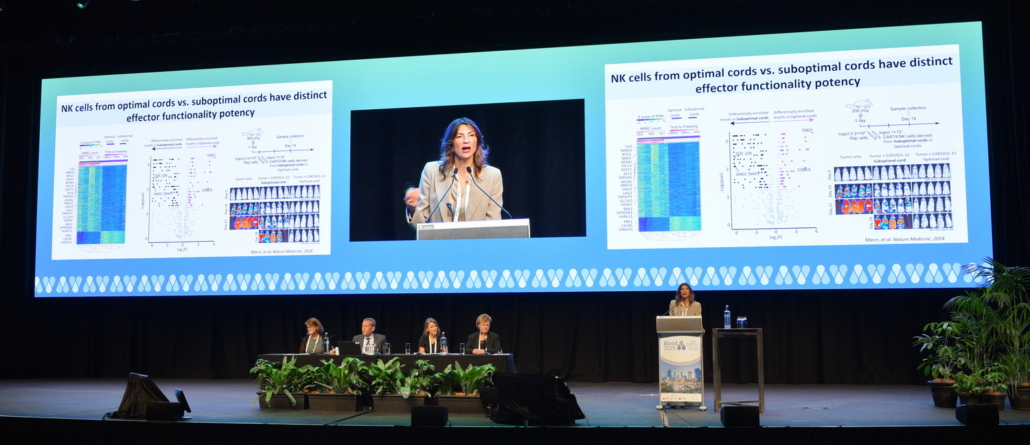
technology for engaging presentations in action at PCEC

Hybrid and fully virtual events are no longer a temporary fix, they’re a permanent feature of modern event marketing. According to a recent Precedence Research report, the global virtual event platform market is forecast to grow from US $15.99 billion in 2025 to US $17.60 billion in 2026 and reach US $37.87 billion by 2034, a compound annual growth rate of around 10 percent. Event organisers have embraced this shift: nine out of ten see virtual events as here to stay, and nearly three‑quarters of companies treat webcasting as a core marketing tactic With a well‑executed webcast, you’re not just streaming video, you’re amplifying your message, enhancing ROI and extending your brand’s reach far beyond the walls of a single venue.

What is webcasting?

Webcasting is the live streaming of video and audio over the internet to an audience anywhere in the world. Viewers tune in on their own devices to watch keynote presentations, panel discussions or demonstrations in real time, and recordings can be made available on demand after the event. Webcasting forms the backbone of many of our Virtual & Hybrid Event Services from corporate conferences to annual general meetings, providing an accessible way for remote participants to join the conversation.

Why webcasting matters in 2026

Today’s audiences expect content to be accessible on their own terms, and the numbers show just how effective webcasting has become:

  • Bigger attendance and deeper engagement. A 2025 survey found that 83 % of hosts get higher turn‑out online than in person, and 77 % of marketers report better lead generation and brand awareness with virtual events. Because anyone can join from home or the office, you’re not limited by venue capacity or travel budgets.

  • Improved ROI and cost savings. According to 99firms, 81 % of organisers see better return on investment from virtual events than from physical ones, with average savings of around US $42 000 per event and 12 % more revenue per attendee. Fewer travel costs and lower production overheads translate to higher margins, even as you reach more people.

  • Rapid market growth. Verified Market Research predicts the virtual events industry will more than quadruple to US $231 billion by 2032, growing at an annual rate of about 25 %. This trajectory underscores how important professional webcasting has become for organisations of all sizes.

  • Environmental and DEI benefits. A Nature Communications study showed that shifting from in‑person conferences to virtual formats can reduce carbon footprints by 94 % and energy use by 90 %. Hybrid conferences with regional hubs can still cut emissions by two‑thirds while accommodating in‑person attendees. Many organisers also highlight how virtual events support diversity and inclusion: remote access enables participation from people who might otherwise face geographic, financial or accessibility barriers.

Benefits for your organisation

Webcasting isn’t just about replacing a live audience with webcams. When done well, it unlocks unique advantages for your event:

  • Extend your reach. Stream to thousands of participants across different time zones, and provide on‑demand playback so anyone can catch up later. This extended reach makes webcasting ideal for product launches, thought leadership, investor updates and more. It’s also a powerful tool for events like AGMs where shareholders may be unable to travel.

  • Boost marketing impact. Complement your digital campaigns with a webcast to deliver a polished, human connection. The average marketer notes stronger lead generation and higher brand recall when live streams are integrated into the customer journey.

  • Save on venue and travel costs. With no need for large ballrooms or interstate flights, virtual and hybrid events free up budget for content development and professional production. At the same time, viewers appreciate the convenience of watching sessions from home or the office.

  • Gather valuable data. Virtual platforms capture rich analytics – from registration details and viewing duration to questions and poll responses. These insights inform future event planning and sales follow‑ups, helping you tailor content for maximum impact.

  • Support sustainability goals. Reducing travel and onsite resource use cuts your event’s carbon footprint dramatically, aligning with corporate environmental, social and governance (ESG) priorities.

When to use webcasting

Webcasting can enhance virtually any live event. Here are some common use cases along with internal resources to help you plan:

  • Corporate meetings and town halls – Stream executive updates, strategy briefings and staff events across multiple offices. See our Meeting & Conference AV Solutions for space‑specific advice.

  • Conferences and exhibitions – Share keynote sessions and panel discussions with remote delegates. Record customer testimonials and interviews on the show floor for later promotion. Our Virtual & Hybrid Event Services can integrate plenary sessions, breakouts and sponsor booths into one platform.

  • Gala dinners & awards nights – A live webcast can amplify the excitement, drive greater exposure and give sponsors more visibility. Combine it with our Awards Night AV Solutions to create a sophisticated on‑site experience.

  • Annual general meetings (AGMs) – Keep shareholders informed and compliant by streaming reports, voting processes and Q&A sessions. Learn more about our AGM AV Solutions.

  • Product launches and demos – Reveal new products via a live webcast, then leverage on‑demand replays for marketing and training. Explore our Product Launch AV Solutions for inspiration.

  • Training and education – Provide professional development or certification courses online. Our experience in Education AV Installation means we understand how to keep remote learners engaged.

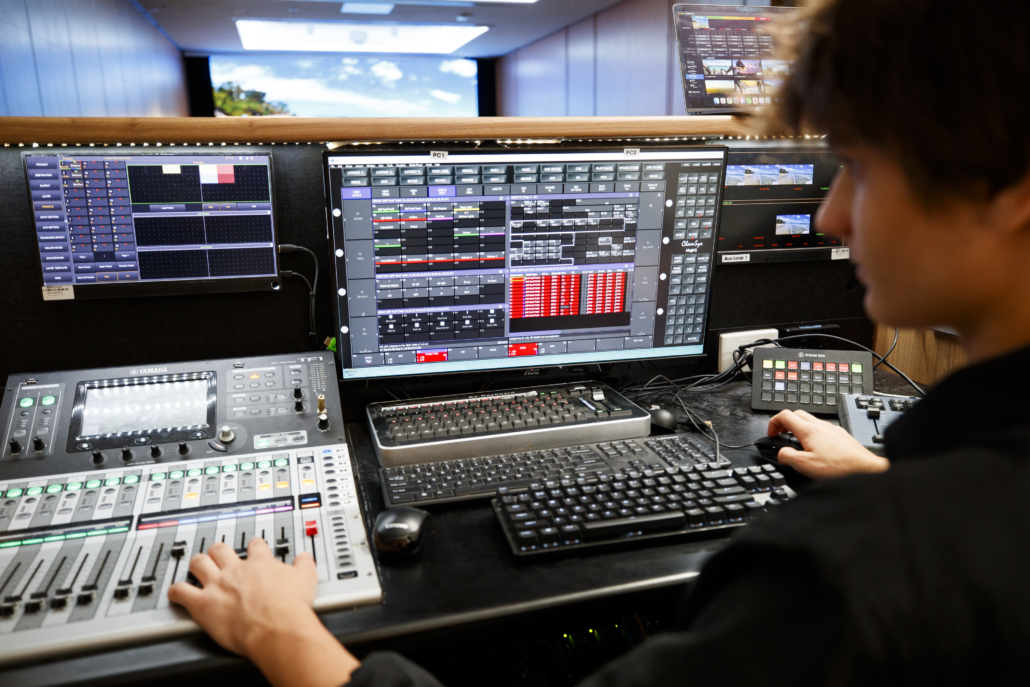
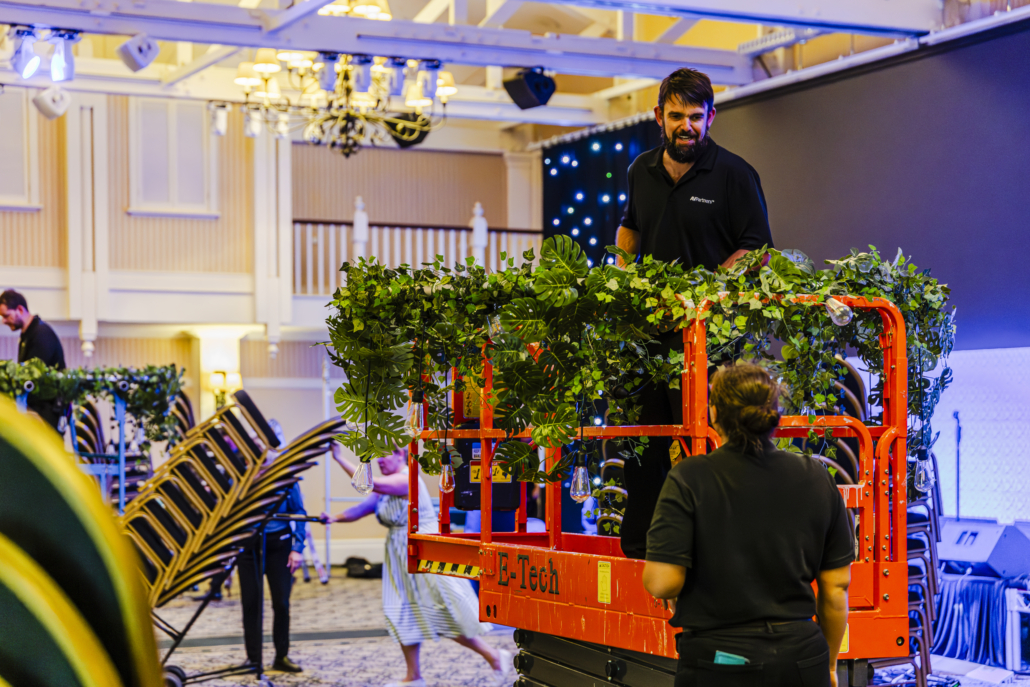
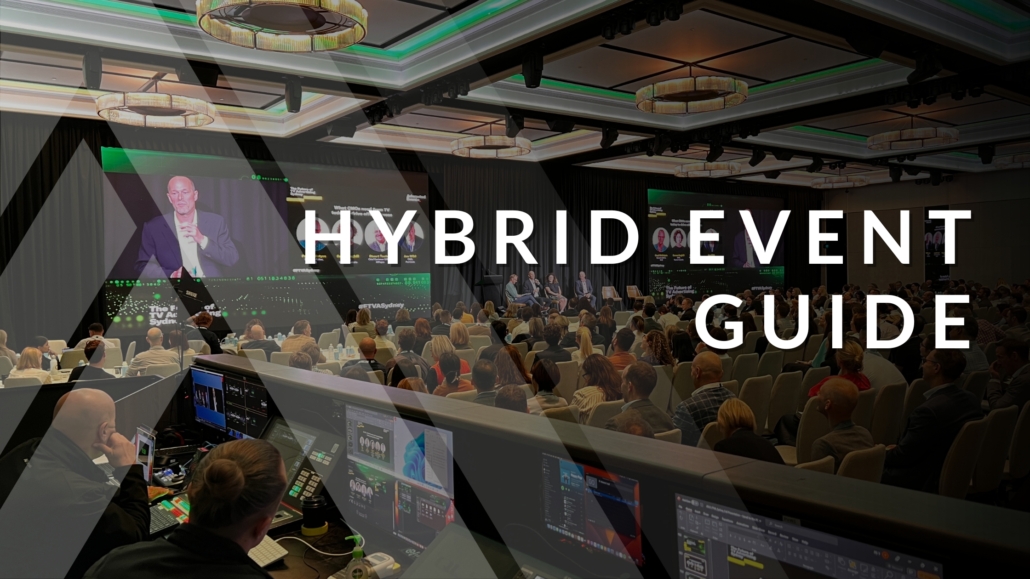
Working the AV equipment at an event

Planning a successful webcast

For a professional result, consider these tips:

  1. Invest in quality production. Crisp audio, high‑definition video and branded graphics signal professionalism and keep viewers engaged. Our virtual event production team uses broadcast‑grade equipment and reliable streaming platforms to ensure your content looks and sounds its best.

  2. Engage your remote audience. Incorporate live polls, Q&A sessions, chat moderators and social media hashtags to foster interaction. Audience engagement features are proven to improve knowledge retention and enjoyment.

  3. Plan for hybrid integration. If you’re combining in‑person and remote elements, ensure everyone can see, hear and interact equally. Use multi‑camera setups, interactive screens and dedicated technical support to bridge the gap between the room and the webcast.

  4. Prioritise accessibility. Offer live captioning and sign language interpretation to accommodate diverse audiences. Consider providing transcripts and on‑demand videos for those who cannot attend live.

  5. Measure and adapt. Review analytics to see how long people watched, which segments sparked questions and which calls to action performed best. Use this information to refine future events and marketing campaigns.

Start streaming with AVPartners

Whether you’re hosting a national conference, launching a product or engaging shareholders, a professional webcast can elevate your message and deliver tangible business results. AVPartners’ Virtual & Hybrid Event Services combine high‑end production, interactive platforms and experienced technicians to ensure your broadcast runs smoothly from start to finish. Talk to our team about integrating live streaming into your next event or explore our Live Streaming & Hybrid Event Services in Sydney to see how we can help you reach audiences anywhere.

a man on stage using modern AV essentials for keynotes
Delivering an inspiring keynote takes more than a confident speaker and compelling content. In today’s hybrid‑first world, audiences expect polished audio‑visual (AV) experiences, seamless digital integration and inclusive features that make everyone feel welcome. Research shows that live events build trust and drive engagement better than digital alone, 95 % of attendees trust brands more after participating in an in‑person event, and 82 % prefer attending events in person rather than virtually. Yet modern audiences are also tech savvy, meaning your AV strategy needs to bridge physical and digital channels seamlessly.

This guide brings your keynote into the 2020s. It balances proven principles, clear sound, high‑quality visuals and pre‑event checks, with emerging trends such as LED walls, multi‑camera streaming, hybrid engagement tools and accessibility technologies. Use these recommendations to partner with your AV team and design keynotes that resonate with in‑person and remote audiences alike.

Prioritise Crystal‑Clear Audio

If attendees can’t hear or understand the speaker, the message is lost. Always start with a solid audio plan:

To dive deeper into crafting flawless event sound, explore our perfect sound for events guide.

Choose the right microphone and master technique

  • Select the right mic – Match microphone type (handheld, lapel or headset) to the venue and presentation style. Headset or lavalier mics free the speaker’s hands while providing consistent sound.

  • Project your voice – A microphone amplifies your natural voice; it doesn’t replace it. Encourage speakers to breathe deeply and speak clearly so the microphone can pick up the full frequency of their voice.

  • Maintain proper distance – Keep a consistent distance and angle to avoid popping or muffled sounds. Speak across the microphone rather than directly into it, and avoid tapping or clapping near it.

  • Mind posture and movement – Standing upright and moving with your shoulders, not your head, keeps audio levels consistent and ensures the microphone stays positioned correctly.

Invest in immersive sound design

  • Use distributed speaker systems – For large rooms, multiple speakers strategically placed around the venue help maintain consistent volume and clarity. Demand for sophisticated conferencing solutions continues to rise, with research firm Frost & Sullivan projecting that the global conferencing market will reach US$28.6 billion by 2026.

  • Add assistive listening options – Offer headset receivers or induction‑loop systems for guests with hearing impairments. Inclusive audio ensures your message reaches everyone.

  • Plan for hybrid – If you’re live streaming, capture clean audio feeds and provide separate mixes for in‑room and remote audiences. Multi‑camera setups and mixing consoles enable you to balance these feeds without compromising quality.

Deliver High‑Impact Visuals

Visuals anchor your story and shape how audiences perceive your brand. Here’s how to make them shine:

Opt for LED walls and high‑brightness displays

LED displays have become the gold standard for keynote stages. They combine individual panels into seamless video walls that can be built straight, curved or custom‑shaped, remain bright in daylight and withstand heavy use. Their energy efficiency and long lifespan,often rated for 100 000 hours  also reduce long‑term costs and environmental impact. For details on AVPartners’ LED solutions, see our Gloshine LED displays offering.

Where venue budgets don’t allow for LED, large high‑brightness flat panels are a strong alternative. Standard office displays are typically 350–400 nits, but ambient light in conference venues often requires brighter screens. Industry standards recommend a display brightness roughly five times brighter than ambient light to ensure crisp contrast. A good AV partner will size and position displays so all attendees enjoy unobstructed views.

Complement visuals with dynamic content

  • Incorporate motion – Video clips, animations and kinetic text help maintain attention. LED walls handle motion smoothly; if you’re using projection, ensure the projector supports high refresh rates to avoid motion blur.

  • Optimise for multiple screens – Many venues now offer secondary screens or confidence monitors for speakers. Design slides for both: create large, legible text for main screens and detailed notes for presenter views.

  • Make content interactive – Use live polls, real‑time Q&A or audience feedback displayed on screen. Active participation has been shown to increase audience attentiveness and enjoyment compared to passive lectures.

For design inspiration and practical tips on creating engaging slides, check out our internal guide on avoiding “Death by PowerPoint”, which explores how to use visuals effectively to captivate your audience.

Build Hybrid Engagement

In 2024 and beyond, keynotes often serve audiences both in the room and online. To deliver a unified experience:

  • Deploy multi‑camera production – Switch between wide shots, close‑ups and audience reactions to keep remote viewers engaged. Affordable multi‑camera rigs and software make broadcast‑quality streaming more accessible.

  • Enhance interactivity for remote participants – Tools like live chat, audience response apps and QR‑code polls give virtual attendees a voice. Analytics from these tools provide insight into viewer behaviour, helping you refine content.

  • Use confidence monitors – Place monitors showing remote questions or chat near the speaker’s sightline so they can respond naturally without breaking eye contact.

  • Plan for reliable connectivity – High‑bandwidth Wi‑Fi and backup wired connections are essential. The rollout of 5G is improving streaming quality and reducing latency. For professional streaming support and guidance, explore our live streaming event services.

To take hybrid engagement to the next level, explore our virtual and hybrid event services for end‑to‑end support.

Create Inclusive and Accessible Experiences

Your keynote should be accessible to everyone. Beyond choosing DDA‑compliant venues, consider these measures:

  • Provide captioning – Closed captions benefit not only deaf or hard‑of‑hearing attendees, but also non‑native speakers and anyone in a noisy environment. Closed captions enhance comprehension for all viewers by providing textual reinforcement and are increasingly mandated by regulation. Advances in automatic speech recognition and AI have improved caption accuracy and lowered costs.

  • Offer sign‑language interpreters – When possible, arrange interpreters on stage or provide a picture‑in‑picture feed for remote viewers. This demonstrates commitment to inclusion.

  • Describe visuals for blind or visually impaired attendees – Provide descriptive narration of charts and images. Offer large‑print or digital copies of slides that can be read via screen readers.

Rehearse and Collaborate with Your AV Team

Conduct a thorough pre‑event technical run

Schedule a rehearsal with your AV team to test sound, visuals and transitions. This time allows the speaker to become comfortable with the microphone, monitors and stage layout. It’s also an opportunity to calibrate lighting for camera shots and confirm that captions, videos and slides appear correctly.

Want more tips on preparing your speakers? Read our speaker preparation guide for checklists and advice on easing nerves and running through technical details.

Keep experts on hand

Ensure your AV partner is present during the presentation to manage cues, troubleshoot issues and adjust settings in real time. Their expertise allows the presenter to focus on storytelling without worrying about technical details.

Modern Trends to Watch

The AV industry continues to evolve rapidly. While not every keynote requires bleeding‑edge tech, being aware of emerging trends can inspire creative touches:

  • Extended reality (XR) and holography – Technologies blending physical and digital spaces, such as holographic displays and volumetric video, are moving from the lab to the stage. Used sparingly, they can create memorable “wow” moments.

  • AI‑driven enhancements – Machine learning powers automatic camera tracking, adaptive lighting and personalised content delivery. AI analytics also provide real‑time feedback on audience engagement, allowing presenters to adjust on the fly.

  • Energy‑efficient systems – Sustainable event practices are gaining prominence. LED lighting and solar‑powered stages reduce environmental impact.

Final Thoughts and Takeaways

A successful keynote marries compelling content with flawless AV execution. Modern audiences expect more than slides and a microphone; they want immersive visuals, clear sound, interactivity and inclusive features. Meanwhile, digital touchpoints before, during and after events amplify reach and conversion: 87 % of working professionals visit a brand’s website after attending a live event, and 85 % are more likely to purchase from that brand afterwards. By working closely with an experienced AV partner and embracing both established best practices and emerging innovations, you can deliver keynotes that inspire, engage and convert.

Ready to make your next keynote unforgettable? Contact us today for a consultation and discover how AVPartners’ sales and installation experts can tailor technology to your venue, audience and message.


feature image showing in-person events in a digital-first world

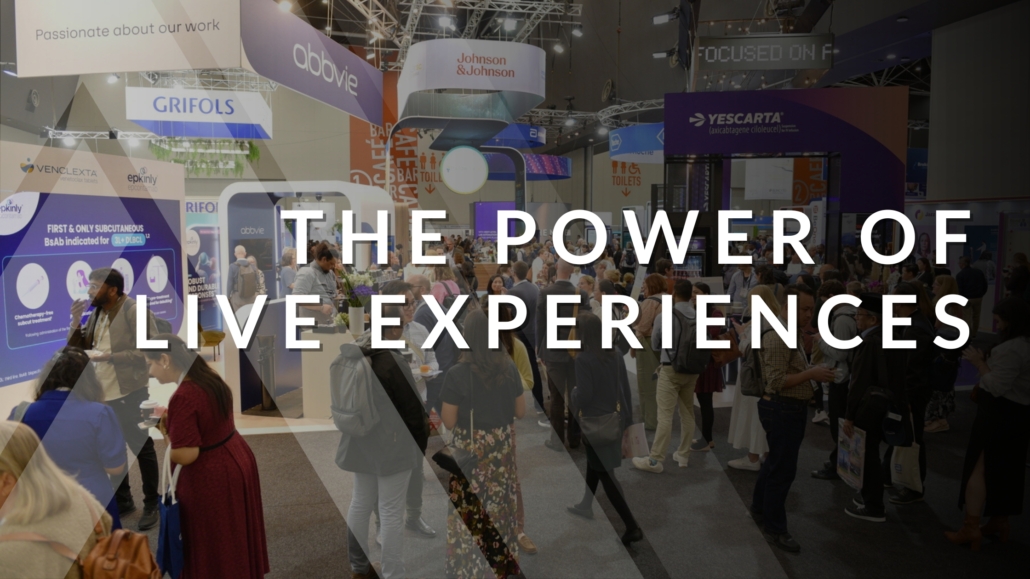
It was not long ago that marketers shifted budgets away from events and toward digital channels. Live experiences were seen as expensive, while email and social media offered seemingly free access to large audiences. Yet recent research shows the pendulum is swinging back. In a world dominated by automation and algorithms, people are craving authentic, human connection. The global events industry is projected to grow from 1.2 trillion dollars in 2025 to 1.35 trillion dollars in 2026, with expectations of reaching 2.1 trillion dollars by 2032. Seventy-four percent of Fortune 1000 marketers plan to increase their event budgets in 2026.

Digital marketing remains essential, but it should not replace live experiences. Conversion rates in digital channels are still low; two-thirds of marketers say their landing pages convert fewer than 10 percent of visitors, and average e-commerce conversion rates sit below 2 percent. In contrast, live events build trust, spark enthusiasm and encourage immediate action. Here is why events deserve a central place in your marketing strategy.

Events Build Trust and Influence

In-person experiences offer something digital simply cannot replicate: genuine, face-to-face connection. Research by the Harris Poll for Freeman found that 95 percent of attendees trust brands more after participating in a live event. Meanwhile, 71 percent of brands saw their reputation decline through other channels in 2024. The same study showed that 92 percent of working professionals feel live events positively influence their perception of a brand.

At a time when trust in media and social platforms is declining, the credibility created through in-person interaction is invaluable.

Immersive Content Engages the Senses

Events allow you to convey your message in an immersive way. Lighting, sound, visuals and staging work together to shape emotion and tell a compelling story. According to the Digital Marketing Institute, events deliver undivided attention and create meaningful human interaction in an omnichannel landscape. They also generate content assets for months to come, from keynote excerpts to attendee testimonials.

Event branding experts have found that immersive environments strengthen recall and increase engagement. Seventy-seven percent of B2B buyers are more likely to engage with brands that demonstrate understanding through personalised experiences. Consistent branding across touchpoints can lift revenue by up to 33 percent, and 91 percent of people report positive feelings about a brand after a well-executed event.

Higher Conversion Rates and Immediate Action

Live events capture attention at the right moment and drive decisions while interest is high. The Freeman Trust Report found that 87 percent of working professionals visited a brand’s website after attending an event, and 85 percent were more likely to make a purchase post-event.
Compare this with average digital conversion rates of 2.4 to 2.8 percent for email campaigns, and the value of in-person engagement becomes clear.

Events blend human interaction with dynamic audiovisual production to inspire confidence and encourage real-time conversion.

A Memorable Brand Experience

People remember how you make them feel. After attending a live event, 96 percent of guests report positive emotions such as feeling inspired, valued or energised. This emotional impact boosts brand sentiment and fuels organic word of mouth.

Seventy-seven percent of consumers say that live engagement increases their trust in a brand. This effect becomes even stronger when events use modern production tools such as LED walls, dynamic lighting and interactive installations. These elements elevate the experience and make your message more memorable.

Amplify Reach with Digital

The impact of live events multiplies when paired with digital channels. Encourage attendees to share photos, videos and insights through a branded hashtag. User-generated content creates buzz and expands your reach long after the event ends.

Recordings, highlight reels and speaker quotes can be repurposed into webinars, blog posts and social content. Hybrid and virtual formats still play a role, particularly for training or remote participation, but research suggests in-person should lead, with digital serving as an extension rather than a replacement.

Make Events Part of Your Marketing Strategy

Events are not a substitute for digital marketing; they are a high-value complement. Use digital tools to promote, extend and measure your event, while relying on face-to-face experiences to build trust and accelerate decision-making. Although events may require higher upfront investment, the long-term benefits often outweigh the cost through stronger engagement, higher conversions and improved customer loyalty.

Practical Tips for Marketers

Define clear objectives:
Identify whether your event is focused on awareness, lead generation or customer retention.

Know your audience:
Design personalised experiences tailored to the needs of your highest-value personas.

Invest in production quality:
Thoughtful staging, engaging speakers and strong audiovisual design elevate your brand.

Connect events with your content plan:
Capture content during the event and repurpose it across channels for extended impact.

Measure beyond ROI:
Track not only leads and sales but also trust, sentiment, retention and word of mouth. These reflect your return on objective.

Conclusion

Human connection remains the cornerstone of effective marketing. In-person events build trust, influence purchasing decisions and create memorable experiences. When combined with smart digital tactics, they amplify your message and deliver significantly higher returns than digital channels alone. If you are debating whether events belong in your marketing plan, consider the evidence: live experiences matter now more than ever.

display technology for corporate AV banner image
Choosing the right display technology is one of the most important decisions you can make when designing a corporate meeting space. The screens you install influence how teams collaborate, share information and make decisions. As businesses demand brighter images, hybrid-ready meeting rooms and systems that remain reliable over time, organisations are moving away from outdated projectors and toward advanced display solutions.

At AVPartners, our Sales and Installation team specialises in assessing corporate environments and recommending the right technology for each space. This guide outlines the core display options and explains how we help clients choose systems that support productivity and create a professional, future-ready workplace.

Why the Right Technology Matters

Corporate audiovisual systems need to support a wide range of activities, from client presentations and staff training to hybrid meetings and real-time data sharing. A mismatched display can lead to washed-out images, unnecessary maintenance costs or systems that fail when integrated with existing platforms.

Effective AV design depends on matching the technology to room size, ambient light, viewing distance, content type and long-term cost considerations. AVPartners assesses all of these factors during our onsite consultations.

Display Options for Corporate Spaces

Projection Systems

Projectors remain a cost-effective way to create large images, particularly in training rooms and auditoriums where lighting can be controlled. Modern projectors offer high-definition quality and flexible lensing, but several considerations affect their suitability for corporate environments.

Ambient light sensitivity

Projected images lose contrast in bright rooms. Industry guidelines recommend display brightness levels at least five times higher than the ambient light for clear visibility, which can be challenging to achieve in well-lit offices.

Maintenance requirements

Lamps or light engines typically last between 3,000 and 10,000 hours. They require replacement, which increases costs and causes downtime. AVPartners can support clients with maintenance plans, but we generally advise projectors only when lighting can be reliably controlled.

Placement constraints

Projectors need clear throw distances and unobstructed paths to the screen. Ceiling mounts or rear-projection spaces are often necessary to avoid shadows and maintain a professional look.

Projection is effective for certain room types, but less practical for hybrid-ready spaces or rooms with large windows and high ambient light.

Flat-Panel Displays

Flat-panel LCD and LED-backlit displays have become the standard solution for huddle rooms, meeting rooms and executive offices.

Key advantages

Bright, crisp images:
Commercial-grade panels deliver strong image clarity. Typical conference rooms perform well with 350 to 400 nit panels, while high-brightness displays over 1,000 nits maintain visibility under strong lighting.

Minimal maintenance:
Flat panels require very little servicing. Integrated speakers and multiple input options simplify daily operation, and there are no lamps to replace.

Interactive features:
Many models support touch functionality and built-in collaboration apps, making them ideal for brainstorming sessions or digital whiteboarding.

Limitations

Single panels above 98 inches become heavy and expensive. Larger boardrooms may require dual displays or a transition to LED video walls. During onsite assessments, AVPartners considers viewing distance and sightlines to recommend the correct size.

LED Video Walls

LED video walls are increasingly popular in corporate lobbies, boardrooms and mission-critical environments. They consist of modular tiles that fit together seamlessly, offering scalability and premium visual performance.

Superior brightness and visibility

LED displays produce high brightness levels that remain clear even in strong ambient light. Research indicates that a 2,000-nit LED wall can outperform what would require more than 40,000 lumens from a projector.

Custom sizing and flexibility

Tiles can be arranged in any dimension or aspect ratio, creating panoramic dashboards, wide-format presentation walls or feature displays with no visible bezels.

Longevity and efficiency

LED tiles can operate for up to 100,000 hours. They convert electrical energy into light far more efficiently than projectors, reducing heat output and long-term energy costs.

Reduced shadowing and lighting needs

Presenters can stand directly in front of LED walls without casting shadows. Because LED walls illuminate themselves, additional task lighting may be unnecessary.

Primary consideration

Upfront cost is higher than flat panels or projectors. However, for flagship boardrooms, 24/7 signage or high-brightness environments, LED technology provides exceptional long-term value and visual impact.

Spotlight: AVPartners All-in-One LED Screen

For organisations that need flexibility without compromising on image quality, AVPartners also offers a mobile All-in-One LED Screen designed for fast deployment across different spaces. The unit folds down to fit through standard doors and lifts, then raises into position within minutes, with no complex rigging or additional equipment required. Once set up, it delivers clear, bright visuals suitable for close viewing or presentation distances, making it ideal for meetings, training rooms, classrooms, studios, lecture theatres and multipurpose event spaces. Because it is easy to move, easy to store and ready to use again immediately, it provides a practical, high-impact alternative to fixed installations and gives businesses the flexibility to present wherever and whenever they need.

Matching Technology to Room Types

AVPartners uses the following guidelines when designing corporate display solutions.

Room Type Audience Size AVPartners Recommended Solution
Huddle room (2–6 people) Small discussions 55 to 65 inch flat-panel display. Interactive options available for whiteboarding and collaboration.
Conference room (6–12 people) Regular meetings, hybrid calls 75 to 98 inch flat-panel display or a small LED wall. Dual screens recommended for hybrid meetings.
Boardroom or training room (12–30+ people) Executive presentations or workshops Dual 98 inch flat panels or a large LED wall. Projectors only if lighting can be dimmed.
Lobby or digital signage Public areas LED video walls or commercial high-brightness displays designed for continuous operation.

Additional Considerations for Corporate Installations

Platform integration

We design systems that work seamlessly with Zoom, Microsoft Teams and other conferencing platforms. Displays are selected for easy content sharing, multiple inputs and network control.

Audio and acoustics

High-quality visuals must be paired with clear audio. AVPartners integrates microphones, ceiling speakers and acoustic treatments to ensure speech intelligibility and hybrid-meeting performance.

Energy efficiency

LED displays consume less power than projectors. They help organisations meet sustainability goals and reduce operational costs.

Maintenance and support

AVPartners provides ongoing maintenance services for all installed systems. For projection-based systems, we plan lamp and component replacements around operational schedules.

How AVPartners Guides Your Decision-Making

Consultative assessments

During onsite evaluations, we review room size, natural light, content types and usage patterns to determine the ideal technology.

Live demonstrations

Where possible, we show clients examples of flat panels, projection and LED walls so they can compare brightness, clarity and scale.

Future-proof solutions

We recommend technologies that anticipate future room changes, display upgrades and evolving collaboration needs. Longevity and scalability are key priorities.

End-to-end support

From design and equipment selection to installation, tuning and post-installation training, AVPartners ensures that every system performs reliably from day one.

Conclusion

Choosing the right display technology requires balancing room conditions, user expectations and long-term strategy. Flat panels excel in many meeting rooms. Projectors remain useful for controlled-light environments. LED video walls provide unmatched visual performance for premium boardrooms and public areas.

With extensive experience designing, supplying and installing corporate display systems, AVPartners guides organisations toward solutions that enhance collaboration and deliver lasting value.

If you are planning to upgrade your meeting spaces or introduce new display technology, our specialists can provide a detailed assessment and tailored installation plan that aligns with your goals.

Learn more about our Sales and Installation services.

event set pieces banner image

When you want an event to feel unforgettable, technology alone is rarely enough. Unique set pieces such as backdrops, scenic elements and projection surfaces can turn an ordinary venue into a powerful storytelling canvas. Research shows that stage design plays a direct role in shaping emotional experience and increasing audience engagement. Cognitive scientists also note that people remember things more effectively when those elements stand out from their surroundings. Novelty matters, and set pieces provide that essential point of difference.

This guide explores why set pieces matter, how novelty and projection mapping enhance emotional impact and the practical steps involved in working with your AV team. It also includes suggestions for photos, videos and links to relevant AVPartners services.

The Power of Scenic Design

Set pieces are far more than decorative elements. In theatre and film, scenic design influences emotions through composition, lighting and carefully crafted visual effects. Scenic designers study scripts and develop environments that help the audience enter the story. When applied to conferences, gala dinners or product launches, these same principles create immersive brand narratives. A customised backdrop combined with creative lighting can transform a generic stage into an experience that supports your message.

Novelty and Memory: Why Distinctive Set Pieces Stand Out

Psychologists call this the Von Restorff effect. When a visual element differs from everything around it, the brain prioritises it for deeper encoding. Novelty captures attention, and the item becomes more memorable. Studies show that distinct colours, shapes or unusual elements are stored more strongly in memory.

Set pieces take advantage of this effect. A unique stage feature becomes a focal point that guests continue thinking about long after the event. It signals importance, elevates the perceived quality of the experience and supports stronger recall of your content.

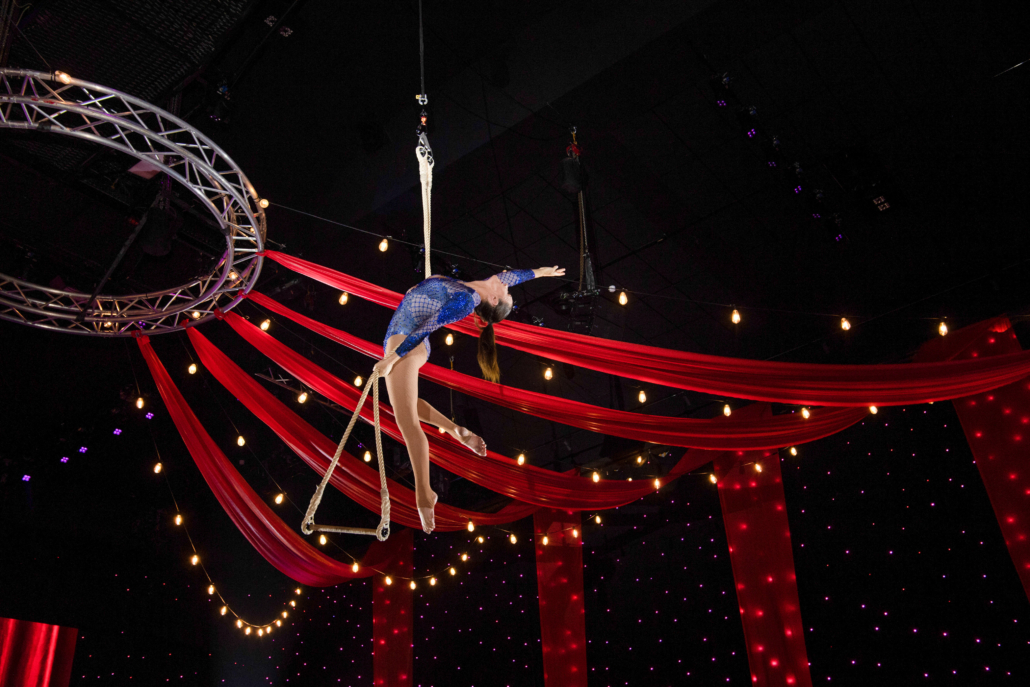
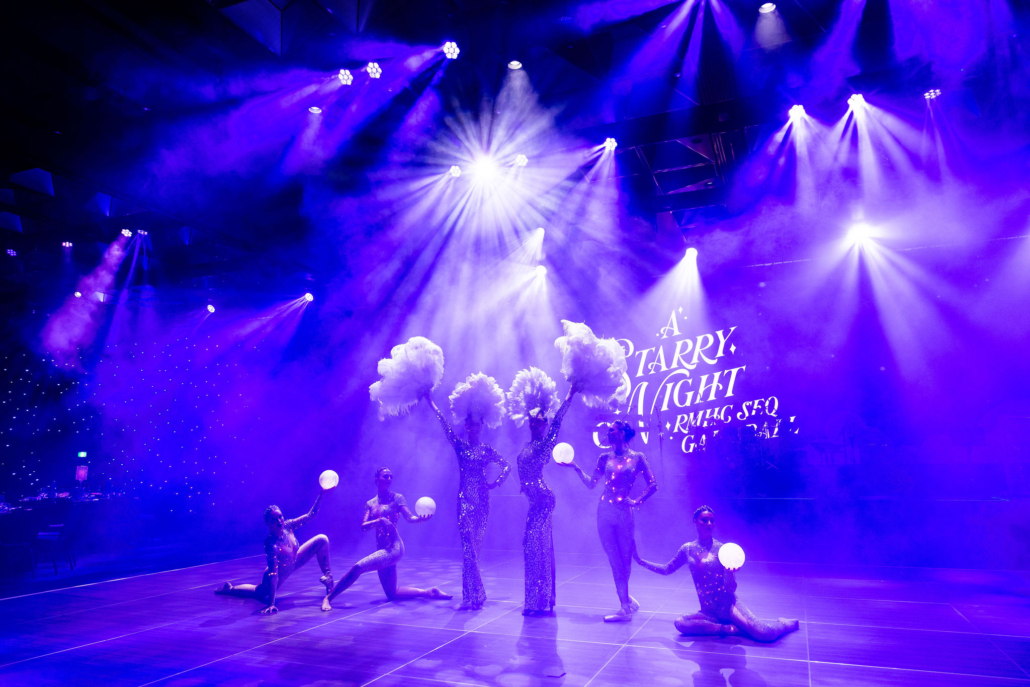
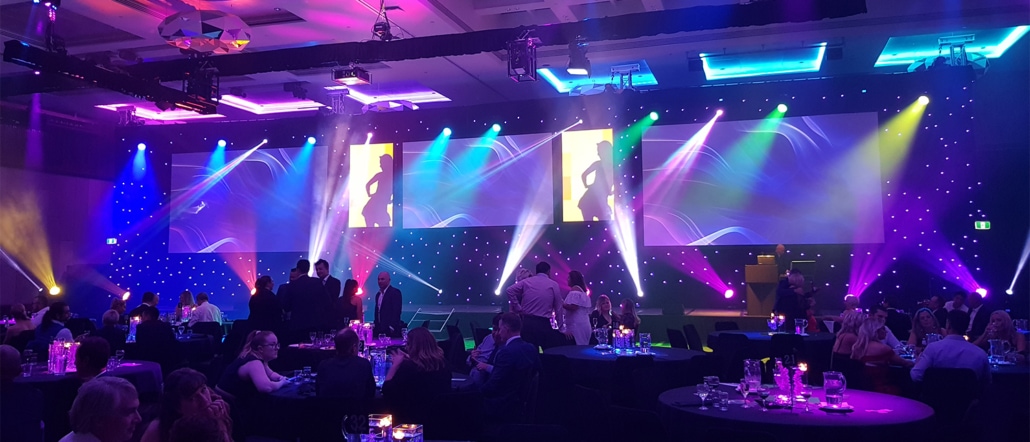
Aerial performer at an awards night gala dinner

Dynamic Set Pieces with Projection Mapping

Projection mapping uses digital projection to transform irregular surfaces into animated, immersive displays. Unlike LED walls, which require flat panels, projection mapping can adapt to curved walls, columns or sculptural forms. This freedom allows set pieces to take almost any shape the event demands.

Key advantages include:

  • The ability to create depth and movement without specialised equipment for viewers

  • Flexible updates, since content can be changed without rebuilding physical structures

  • Reduced waste, as projection surfaces can be reused

  • Easier repositioning of projectors compared with moving heavy LED panels

  • Strong visual impact that drives conversation and creates a memorable experience

Projection mapping allows stages to shift between environments in seconds. Walls can change colour to match a brand, a product reveal can be heightened with animated textures or an entire room can evolve throughout the evening.

Visual idea: A video example of projection mapping transforming a blank surface into an animated scene, with a note explaining its flexibility and reusability.

Practical Advantages of Set Pieces

Set pieces contribute more than visual flair. They also solve practical challenges at events.

Faster transitions: Custom backdrops can hide pre-set performers or equipment, allowing seamless changeovers between program segments.

Improved focus: Larger scenic elements draw attention to the stage and help a speaker stand out in a large room.

Enhanced branding: Scenic structures can incorporate logos, motifs or thematic patterns that reinforce identity.

Sustainable options: Modular scenic elements and projection surfaces reduce waste and can be reused across multiple events.

Tips for Working with Your AV Partner

Start early

Set pieces and projection mapping require planning. Begin the design process at least six weeks before your event. This allows time to refine concepts and test technical elements.

Discuss goals and budget openly

Collaborate closely with your AV team. They can suggest solutions that fit both your objectives and your financial parameters.

Identify high-impact areas

You do not need to transform the entire venue. Concentrate on entryways, stages or focal points for maximum effect.

Balance creativity with practicality

Consider safety, logistics and installation needs. Modular structures offer flexibility without sacrificing visual impact.

Align content with the design

Work with your designers and AV team to sync projected content with physical elements. Sometimes simple logo projections or textured lighting can create as much impact as detailed animations.

Stage performance live at A Starry Night Gala Ball 2025 Brisbane

Bringing Your Vision to Life

At AVPartners, our staging specialists design and deliver custom set pieces that enhance events and engage audiences. Whether you want a bespoke scenic backdrop, dynamic projection mapping or a blend of both, our team can guide you through creative development and manage all technical requirements. Learn more about our event styling services or visit our contact page to begin planning your next standout experience.

Conclusion

A memorable event is one where the environment supports your story. Unique set pieces draw on the emotional power of stage design and the psychology of novelty to create lasting impact. When combined with projection mapping and close collaboration with your AV team, you can deliver the WOW factor while maintaining efficiency and sustainability. If you are ready to bring your vision to life, our experts are here to help.

Colour shapes experiences blog banner demonstrating the power of colour in events
When planning an event, many organisers focus on logistics and staging while overlooking one of the most powerful atmosphere-shaping tools available: colour. Research shows that colours influence mood, attention and behaviour, which means they act as silent storytellers throughout your event. The right colour palette reinforces your message, elevates guest experience and helps you create a space that feels exactly the way you intend.

This guide explores the psychology of colour and offers practical ideas for selecting palettes that support different event types. It also includes suggestions for visual assets and opportunities to link to AVPartners styling services.

Power of Colour in Events

Colour psychology studies how hues influence thoughts, emotions and behaviour. Findings show that warm colours such as red, orange and yellow often increase energy and optimism. Cool colours such as blue and green promote calm and reduce stress. Bright, saturated colours stimulate alertness, while soft pastels provide comfort and a sense of safety. Even neutrals carry meaning: black represents power and elegance, while white signals purity and simplicity.

Warm Colours: Energy and Interaction

Warm colours like red, orange and yellow tend to command attention. Research links these hues with excitement, optimism and heightened energy. Red can increase heart rate and create a sense of urgency, which makes it useful for drawing attention to focal points. Orange encourages social interaction and a feeling of enthusiasm. Yellow communicates warmth and happiness, although too much can feel overwhelming, so it is best used in moderation.

Warm tones work well for networking events, celebrations, launches and activations where you want guests to feel energetic and engaged. Event designers often use amber or red lighting washes, warm uplighting on architectural features or floral elements that carry warm accents. Pairing warm tones with neutral shades prevents visual fatigue.

Cool Colours: Calm and Professional

Cool colours such as blue, green and purple create a sense of calm and trust. Blue is widely associated with professionalism and stability. Green symbolises balance and renewal. Purple, which blends the grounded feel of blue with the energy of red, conveys creativity and luxury.

These colours suit conferences, awards dinners and formal galas. They help guests feel focused and relaxed while giving the event a polished, elegant tone. Designers frequently use cool colours through stage lighting, linens, floral arrangements or digital displays. A small amount of warm accent light, for example candlelight or soft tungsten fixtures, prevents the environment from feeling too clinical.

Visual idea: A wide shot of a gala dinner with soft blue and green uplighting to show how cool tones create a peaceful and professional atmosphere.

Dark and Neutral Colours: Sophistication and Contrast

Dark tones such as black, charcoal and deep navy evoke sophistication and authority. Event psychology studies emphasise that black communicates formality and elegance, which is why black-tie events feel luxurious. Too much darkness can feel heavy or somber, so designers often balance dark palettes with whites, metallic accents or warm highlights.

Dark themes work well for galas, awards nights and premium product launches. Lighting becomes especially important in these environments. Pin-spotting, textured projections, metallic décor and LED furniture create depth and prevent the space from feeling flat. Neutral colours such as beige and grey serve as grounding elements that tie bright and dark accents together.

Visual idea: A black-tie event with dark table settings contrasted against crisp white napkins and warm pin-spot lighting.

Bright and Vibrant Colours: Fun and Alertness

Bright, saturated colours like neon greens, hot pinks and electric blues communicate energy and excitement. Behavioural research shows these colours increase alertness and stimulate curiosity. They are ideal for celebrations, youth events or entertainment-focused evenings.

Use vibrant colours intentionally. Too many competing hues can feel chaotic. Accent lighting, LED installations and projection content that shifts with the music can create an immersive, high-energy experience without overwhelming the space.

Visual idea: A video clip of a dance floor with animated projections and changing neon lights.

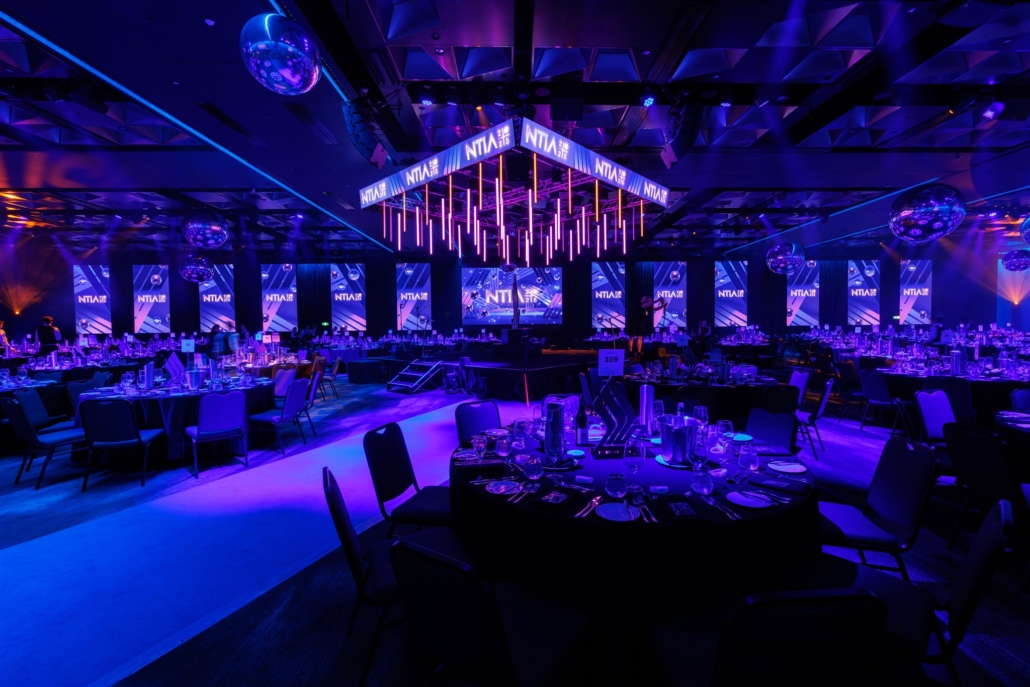
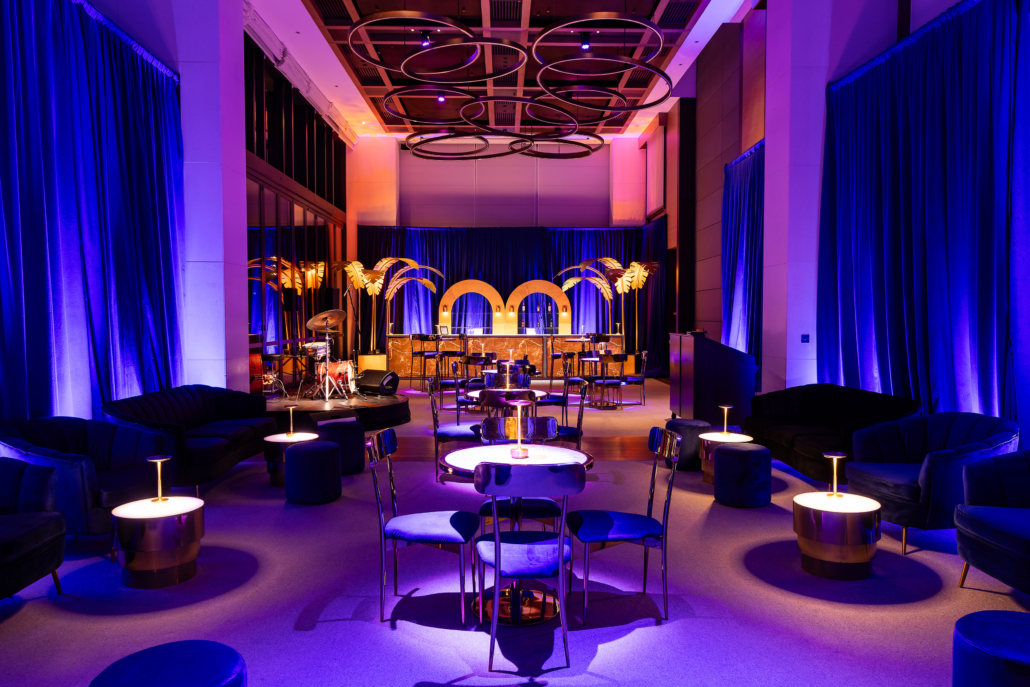
Room Styling for an awards night gala dinner

Cultural and Contextual Considerations

Colour meanings vary across cultures. Some studies show that black symbolises sadness in many regions, while red represents love and green conveys contentment. White may represent purity in some cultures but is associated with mourning in others. When planning for diverse audiences, it is important to consider cultural interpretations to avoid unintended messages.

Demographics also influence colour preferences. Research indicates that women often lean toward softer tints, while men frequently prefer bold primary hues. These tendencies should not dictate your entire palette, but they can help refine the overall aesthetic.

Bringing Colour to Life with Lighting and Décor

Colour is expressed not only through décor but also through lighting design. Lighting is one of the most effective tools for shaping atmosphere because colours can shift throughout the event. Dynamic uplighting, coloured wall washes, ceiling projections and LED accents allow you to transition the room from reception to dinner to dance floor in a matter of seconds. Projection mapping can completely transform the environment and immerse guests in your theme.

AVPartners offers complete event styling services that integrate lighting, décor and audiovisual design. Our team can create custom colour palettes and lighting schemes that reflect your brand and elevate your event. Learn more about our event theming and styling services or contact us to discuss your next event.

Conclusion

Colour plays a powerful role in shaping an event experience. Warm hues encourage energy and connection. Cool tones support focus and professionalism. Dark colours signal luxury. Bright colours generate excitement. By understanding the psychology behind colour and tailoring your palette to your goals, you can create events that feel cohesive, memorable and aligned with your message. If you are ready to elevate your next event through thoughtful colour design, our team would love to help bring your vision to life.
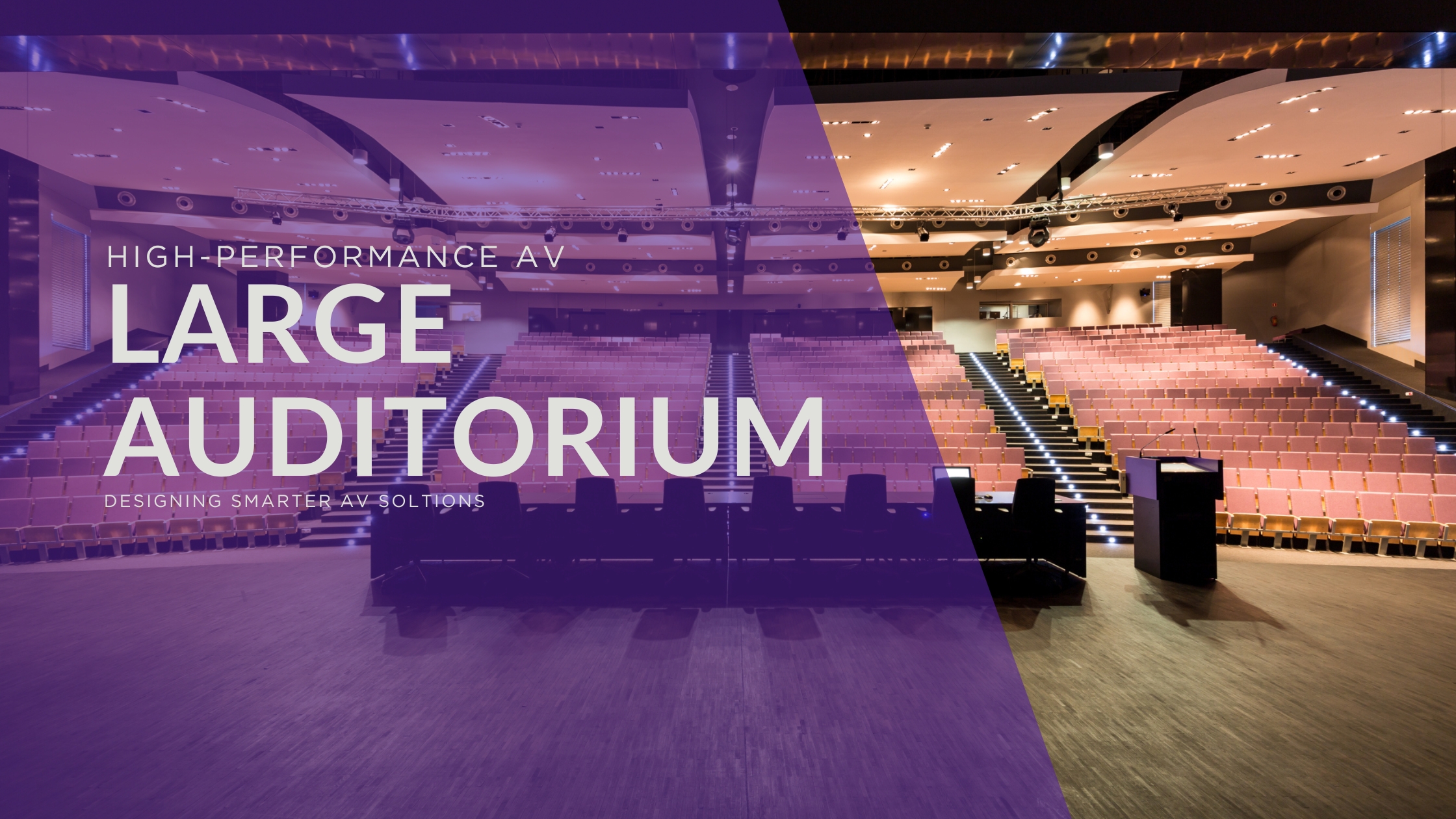
Blog Banner for Auditorium AV systems article
Auditorium AV systems are essential because auditoriums host some of the most significant events on campus and within communities—from graduation ceremonies and keynote lectures to theatrical performances and public forums. Creating an immersive experience for every attendee requires more than a stage and a projector. Professional AV systems deliver clear sound, large-format visuals, intelligent lighting and seamless integration with streaming platforms, ensuring the space supports diverse events and audiences.

Research from professional audio manufacturers shows that line-array speaker systems, which stack multiple modules vertically, project sound evenly across large rooms and reduce volume drop-off for distant seats. This consistency is essential for auditoriums where audience size, seating layout and acoustic conditions vary widely.

This guide covers the essential components of an auditorium AV system, key design considerations and the cost factors to expect when planning an upgrade or new installation.

Why Auditorium AV Matters

As one of the largest gathering spaces in an institution, an auditorium must support high intelligibility, strong visual impact and hybrid participation. The right AV system:

Delivers intelligible sound to every seat

Distributed speakers and digital signal processing help ensure both the front row and the balcony hear clearly. Uniform audio coverage is essential for speeches, performances and panel discussions.

Provides stunning, large-format visuals

LED video walls or high-brightness projection systems allow all attendees to see slides, videos and live camera feeds with clarity.

Supports streaming and remote participation

High-quality PTZ cameras and conferencing tools enable hybrid events and allow audiences to join from anywhere.

Adapts to multiple event types

The system should support lectures, theatrical productions, corporate presentations and community gatherings without major reconfiguration.

Key Components of an Auditorium AV System

1. Displays

Large-format LED walls or high-brightness projectors offer the clarity and scale needed for expansive spaces. Proper brightness and pixel pitch ensure visuals remain sharp, even under stage lighting.
On-stage confidence monitors help presenters maintain flow without turning away from the audience.

2. Audio

A robust audio system is the backbone of any auditorium. This typically includes:

  • Advanced line-array speakers for even sound distribution
  • Subwoofers and amplifiers for full-range audio
  • Directional microphones for presenters, performers and panelists
  • Assistive listening systems for guests with hearing impairments

Professional guides, such as the one from T.I Audio, explain that line arrays provide improved clarity, controlled dispersion and scalable configurations suitable for different venue sizes.

Digital mixers and DSPs balance microphones, instruments and playback sources, ensuring high intelligibility and reliable performance.

3. Lighting and Staging

Stage lighting systems highlight presenters, enhance performances and visually direct the audience’s attention. Intelligent fixtures, dimmers and preset scenes allow operators to adapt lighting for different event formats.

Acoustic treatment—including diffusers, wall panels and overhead baffles—improves speech intelligibility and enhances musical clarity by controlling reflections and reverberation.

4. Video Conferencing and Streaming

High-definition PTZ cameras capture the stage and audience for recording, live-streaming or hybrid participation. Streaming integration allows events to reach remote attendees or be archived for future viewing.

5. Control Systems

Centralised touch-screen control panels simplify operation. Users can switch inputs, trigger lighting scenes, adjust audio levels and start recordings—all without technical expertise. Preset modes ensure consistent performance across event types.

Design Considerations

1. Flexibility for Multiple Event Types

Auditoriums must support everything from lectures to dramatic performances. Movable lecterns, adaptable lighting and multiple input locations help make the space more versatile.

2. Accessibility and Inclusivity

Assistive listening devices, closed-captioning systems and well-placed screens ensure all attendees—including those with hearing or visual impairments—can fully engage.

3. Professional Aesthetics

Discreet speaker placement, concealed cabling and tidy equipment racks maintain the architectural beauty of the space while preserving easy access for maintenance.

4. Sightlines and Acoustics

Good auditorium design ensures that every seat has an unobstructed view of the stage and displays.

For acoustics, the use of acoustical shells, overhead “clouds” and shaped walls to improve projection, control reflections and ensure performers can hear each other. These features are critical for multi-purpose venues.

Industry Insights and Further Reading

To explore professional audio solutions further, T.I Audio’s line-array guide explains how stacked modules create a cohesive wavefront, improving clarity and consistency across large venues.

For design inspiration, Wenger Corporation’s Performance Spaces Planning Guide details how acoustical shells, ceiling treatments and architectural shaping support more expressive, intelligible performances.

Reviewing these resources can help you plan an auditorium that delivers exceptional acoustics, visibility and flexibility.

Budgeting and Cost Considerations

Auditorium AV budgets vary based on room size, design complexity and desired system capabilities. Key cost drivers include:

Room size and acoustics

Larger rooms require more speakers, amplifiers and acoustic treatment to maintain consistent coverage. Providers such as Soundtrack.io offer tools to estimate speaker requirements and placement.

Display technology
  • LED walls: Higher upfront cost, superior brightness, long lifespan.
  • Projection: Lower initial cost but ongoing maintenance and lamp replacement.
Lighting and staging

Theatrical lighting rigs, intelligent fixtures and motorised bars add cost but dramatically improve production quality.

Infrastructure

Conduits, cabling, racks, power distribution and networking are essential and should be included in early budgeting.

Professional installation and calibration

Hiring qualified integrators ensures correct speaker aiming, tuning, rigging safety and long-term reliability.

Maintenance and staff training

Budget for ongoing servicing, firmware updates and training so staff can operate the system confidently.

Investing in a well-designed system reduces long-term costs by avoiding premature replacements or performance issues.

Choosing the Right Partner

The success of an auditorium upgrade depends on working with an experienced integration team.
AVPartners provides end-to-end auditorium AV solutions, design, equipment specification, installation, automation and ongoing support. Their systems prioritise clear visuals, exceptional audio and seamless hybrid-event integration.

Ready to upgrade your auditorium?
Explore our auditorium AV installation services or contact us to arrange a site assessment.

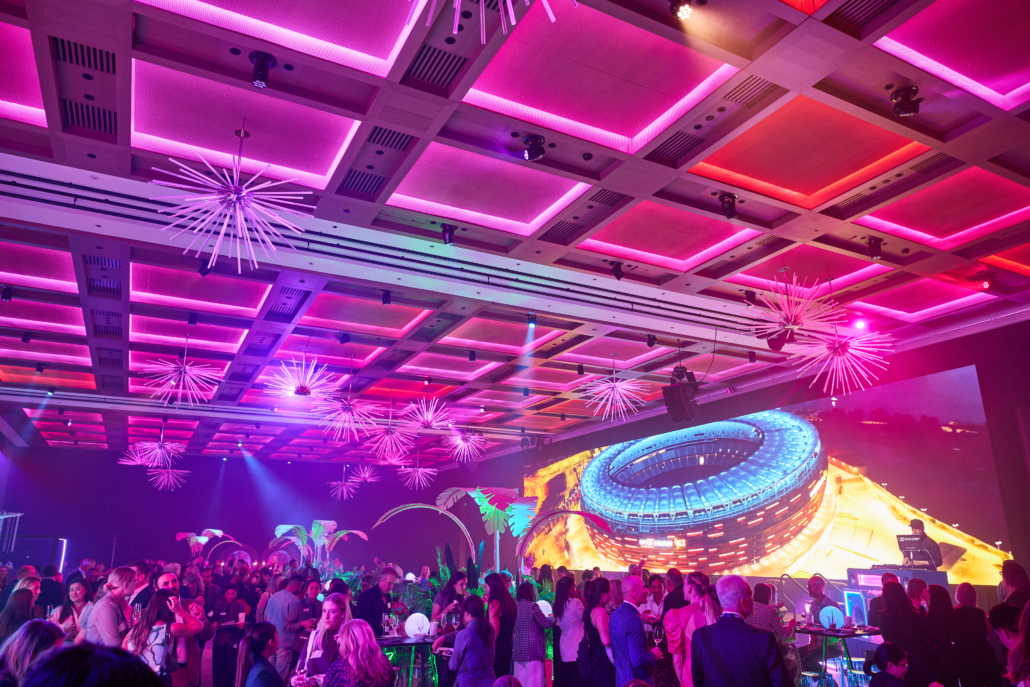
Lighting is more than illumination. It creates instant ambience, tells a story, evokes emotion, and brings your brand to life. The right lighting design can turn a ballroom into a high-energy product launch, a calm networking space, or an elegant gala dinner. Sometimes all of these can happen within the same event.

With AVPartners Venue Solutions, intelligent ceiling-installed lighting delivers Instant Ambience™ that adapts in a moment.

Why Lighting Design Matters

Professional lighting shapes the experience of every guest. Directionality, intensity, colour and texture all influence shadows, focus and atmosphere. When combined thoughtfully, lighting does more than brighten a room. It underscores your message and creates a lasting impression. Achieving this effectively relies on the concept of Instant Ambience™.

Instant Ambience™ takes these fundamentals to the next level. Event planners can now shift moods seamlessly in real time.

The Advantages of Modern LED Fixtures

LEDs are the foundation of Instant Ambience™. Compared with traditional incandescent bulbs, LEDs:

  • Use up to 80% less energy
  • Last more than 25,000 hours
  • Produce less waste and reduce replacement costs

With RGB and advanced colour mixing, LEDs can be tuned to any hue to match a brand or set a mood. This flexibility is what makes ambiance infinitely variable.

How Colour Shapes Mood

Every colour triggers an emotional response.

Colour Mood & Recommended Uses
Red Energy and excitement; ideal for launches and concerts
Blue Calmness and focus; suited to conferences
Green Balance and relaxation; effective for wellness and eco-events
Yellow Optimism and creativity; ideal for workshops and networking
Purple Luxury and exclusivity; perfect for galas
White Clarity and modernity; ideal for product showcases
Orange Enthusiasm and friendliness; useful for networking
Pink Playfulness and romance; suited to celebrations

With Instant Ambience™, lighting can shift on cue. A room can energise an audience at the start of a keynote, soften for dinner, or align with brand colours throughout, offering instant transformation capabilities.

The Layers of Event Lighting

  • Ambient lighting provides the overall mood.
  • Task lighting illuminates stages, presenters or dining areas.
  • Accent lighting highlights décor, architecture or centrepieces.

In the past, these layers had to be planned as static elements. With Instant Ambience™, they can blend dynamically and adapt as the event unfolds.

ballroom at the Blueprint Homes 20th Anniversary Dinner Perth

Dynamic and Thematic Lighting

Dynamic lighting changes intensity, colour and patterns to energise a room. Thematic lighting aligns with a corporate identity or event theme, reinforcing the story. It can mean projecting a brand logo, bathing walls in company colours or matching cues with the moment of a product reveal. Intelligent systems make these transitions seamless, and Instant Ambience™ enhances this process remarkably.

The Technology Behind Instant Ambience™

Modern control systems bring Instant Ambience™ to life through:

  • Pre-programmed lighting scenes
  • Real-time adjustments via console, tablet or smartphone
  • Wireless DMX and Bluetooth control for seamless syncing

Because the technology is pre-installed in AVPartners venues, it is ready to go without the delays or costs of bump-in and bump-out. This built-in capability transforms Instant Ambiance™ from a concept into a practical, reliable solution that saves time and maximises impact.

Guiding Attention and Creating Immersion

Lighting is not only about mood. It directs attention. Spotlights can highlight a keynote speaker. Pin-spotting can emphasise décor and centrepieces. Colour shifts can guide audiences between program elements, and Instant Ambience™ ensures these shifts are fluid. When paired with LED walls, lighting becomes part of an immersive, multi-sensory experience.

Sustainability Benefits

Clients increasingly demand eco-friendly event solutions. LED lighting reduces energy use and waste. Fixtures also minimise setup time and eliminate cabling, creating safer and cleaner spaces.

In Action

Imagine a gala that begins with warm, golden hues for networking. The room then shifts to high-energy red and orange for a product reveal. Later in the evening, calming blue and green tones create the right mood for conversation. Instant Ambience™  makes all of these transitions possible and keeps the experience engaging throughout the event.

The Partner-Driven Difference™

At AVPartners, our designers and technicians combine cutting-edge lighting systems with deep expertise. From planning and installing to programming and operation, we ensure ambiance aligns with brand, purpose and message. With Venue Solutions, hotels gain faster event turnarounds and clients gain immersive experiences their guests will never forget. The efficiency of Instant Ambience™ plays a pivotal role in this delivery.

In a significant development for the Australian hospitality and events industry, AVPartners, a leading provider of integrated event and audiovisual services, is thrilled to announce its new partnership with the prestigious InterContinental Sanctuary Cove Resort. This partnership underscores AVPartners’ commitment to expanding its footprint in the luxury resort sector, where it has already achieved remarkable success.

AVPartners will be introducing state-of-the-art technology installations, including an impressive LED screen, AI tracking production cameras, creative lighting solutions, and meeting rooms equipped with the latest technology, all designed to elevate the event experience to new heights.

Leading the charge on this new venture will be Mitch Grant, a respected partner at AVPartners, renowned for his instrumental role in driving the company’s success on Hamilton Island. Mitch’s leadership and visionary approach have been pivotal in setting new benchmarks for event execution and client satisfaction. Under his guidance, the team is poised to replicate this success at InterContinental Sanctuary Cove Resort, promising an exciting future for guests and event planners alike.

“We are incredibly excited about this partnership,” said Managing Partner Andrew Hackett at AVPartners “InterContinental Sanctuary Cove Resort is a remarkable property, and we are familiar with its unique offerings and potential. With Mitch Grant leading our talented team, we are confident in delivering exceptional experiences that surpass expectations.” 

This partnership marks a pivotal moment where innovation meets elegance, setting a new standard for luxury events in Australia. 

As major sponsors of Hamilton Island Race Week 2023, AVPartners provided more than just AV support. We delivered tailored event styling across the six-day regatta, which welcomed over 180 yachts and 2,000 sailors. Highlights included nautical-themed florals and rope décor at the qualia opening, vibrant beachfront lunches on Catseye Beach featuring Amy Shark, and an intimate dinner at Pebble Beach with fire pits, French linens, and live music. The Paspaley Lunch combined native greenery, wood textures, and high-energy entertainment with a DJ, percussionist, and saxophonist.