Tag Archive for: tips

Entertainment performs for conference attendees

Conferences are evolving rapidly. Attendees expect more than traditional lectures; they want immersive, personalised experiences that reflect modern technology and culture. In 2026, successful conferences use innovative formats to keep audiences engaged and inspired.

Multi‑sensory experiences

Engaging all five senses has become a priority. Research shows that sensory‑rich events increase emotional connections and memory recall. Event planners are using dynamic lighting, LED walls and projection mapping to transform conference spaces. Curated playlists and live musicians set the mood, while themed menus and interactive food stations add flavour. Textured linens, hands‑on installations and premium giveaways provide tactile stimulatio. Even scent is considered, subtle fragrances or fresh flowers create inviting aromas. Balancing these elements ensures the sensory experience complements your message without overwhelming attendees.

Seamless day‑to‑night events

Binary events, where conferences transition into evening networking dinners, are gaining popularity. Instead of moving attendees to another venue, organisers convert the same space from daytime sessions to gala dinners. This approach reduces logistical costs and keeps guests engaged. By refreshing floor plans, lighting and décor, planners reignite energy and create an evening atmosphere. Day‑to‑night events also allow for creative programming: daytime workshops and keynote presentations followed by live entertainment, awards and socialising.

Hybrid conferences and global reach

Hybrid events, which blend in‑person and virtual participation, remain vital. Surveys predict that 70 % of events will include hybrid components. Live streaming lets people join from anywhere and extends your event’s impact; professional platforms provide adaptive bitrate streaming, analytics and secure delivery. Hybrid conferences also allow you to record sessions for on‑demand viewing and build communities beyond the event date. For a reliable hybrid solution, explore Virtual & Hybrid Event Services by AVPartners.

Hyper‑personalisation and micro‑experiences

Attendees expect events tailored to their interests. According to industry forecasts, hyper‑personalised journeys will dominate conferences. Registration processes now collect preferences to create customised agendas, targeted notifications and personalised networking opportunities. Smaller group activities, roundtables, cohort discussions and identity‑based meetups, give people meaningful connection. AI‑powered matchmaking tools pair attendees with similar interests, while micro‑events deliver niche content within the larger program.

Digital immersion and emerging tech

Event technology is pushing boundaries with augmented reality, virtual reality, holograms and drones. Immersive virtual worlds and multi‑camera live production enable participants to explore digital environments and interact with remote speakers. Drones capture unique footage and add drama during opening ceremonies or evening entertainment. Holograms and mixed‑reality displays bring speakers or products to life. Gamified interactions, such as mobile scavenger hunts or AR quests, keep guests engaged throughout the conference.

Sustainability and wellness

Conferences in 2026 place greater emphasis on sustainability and wellbeing. Planners reduce waste by eliminating single‑use materials, sourcing local food and partnering with eco‑friendly suppliers. Wellness breaks, yoga sessions, meditation rooms or outdoor walks, help attendees stay focused and recharge. These elements reflect broader societal values and leave a positive impression on delegates.

Conclusion

Staying up to date with conference trends means embracing technology, creativity and human connection. By designing multi‑sensory experiences, creating seamless day‑to‑night transitions, offering hybrid participation, personalising attendee journeys and incorporating immersive tech, you ensure your conference stands out in 2026.

For support with cutting‑edge event technology and creative design, explore AVPartners’ Conference and Event and Multimedia Production services.

Contact Us Online & Hybrid Event Services Online Event Production Services

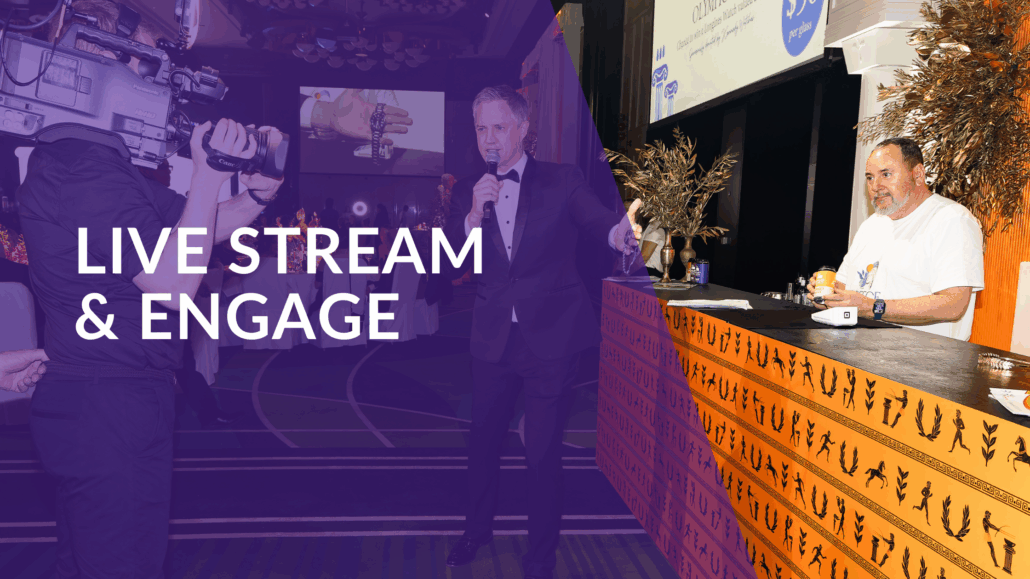
Live streaming has become a craze ever since the pandemic of Covid-19 has forced event organisers into alternative ways of holding their events.

The capability of live streaming has become hugely popular in recent years, especially for events that attract global attention. Live streaming offers people the opportunity to experience events, even if they can’t be there in person.

Perhaps you’ve considered live streaming your event, but you’re not entirely sure if it’s the right thing to do. Maybe you’ve thought, “Well, it could be great exposure, but then again who will purchase a ticket if it’s going to be live streamed for free?” This is a very sensible question to ask. Although there are many benefits to live streaming events, it’s important to consider whether it is right for your event. Some events thrive on exclusivity. Keeping an event exclusive might help with setting ticket prices, selling tickets, or attracting thought leaders. These events might benefit from being kept intimate instead of being live streamed. But for many events, especially ones that have an objective of broadcasting information or selling a certain product or service, live streaming can be greatly beneficial. Here’s why:

Maximise your exposure

Live streaming, especially via social media can help build exposure for your event. Your event can be live streamed to your social media audience, but it can also reach a larger audience if the content is shared and interacted with online. Live videos tend to attract more online engagement compared with other types of content. They incite a sense of urgency, compelling people to watch. When you share your live stream to social media, you also have the option of running ads in order to reach an even wider audience.

Use data to improve your events

When you live stream your event, it gives you the opportunity to learn more about your audience through online data. Bringing your event online can help you gather important information about who your audience is and what they like (or dislike) about your event. Whether you’re live streaming on your website or social platforms, you have access to data on who is engaging with your content. This information can help you make improvements on your event next time around.

Provide a channel of communication for your audience

If you’re broadcasting your event on social media, your live stream will give your event goers and online audience a platform to interact with you while the event is running. It gives them the opportunity to ask important questions about keynote speakers, products being launched or whether there are follow up events.

When you’re live streaming a corporate event, it’s important to get it right. The last thing you want is a major disruption or delay in the audio or video. When you do it yourself there are many risks involved that can disrupt the smooth running of your event. Make sure to hire a professional audiovisual team to do all the hard work so that you don’t have to. At AVPartners we have the right technology and expertise to broadcast your event so that you can rest assured that it’s done the right way.

Get in touch with us today about your next live streamed event.

Contact Us Online & Hybrid Event Services Online Event Production Services

Planning and executing an event can be an exciting, yet very busy time. Most require months of preparation and strong plans in place to achieve the best outcome. However, from time to time even the most seasoned of event planners can face challenges.

So, what are some common event planning mistakes and how can you avoid or overcome them?

Poor communication

As an event planner, a key responsibility is to know what is going on across your internal team and external parties like suppliers and event speakers and attendees. However, if you don’t communicate clearly to each relevant group what you are expecting from them, then it’s likely that mistakes will be made as each member of your event delivery team will be unsure of their responsibilities.

The best way to overcome this challenge is to make a runsheet – this is a clear breakdown of what should be happening throughout the event and who will be completing each task. It must include times to start and finish certain tasks and should have the contact details of key members of the event delivery team so that each member of the team knows who to speak to if they have questions.

Lack of clear signage

Don’t have your event attendees running late for their favourite speakers or preferred sessions because they can’t find where a certain presentation is being given. The best way to overcome this challenge is to make sure each room is clearly signposted and there are clear directions to other spaces. Digital signage can assist with this as you can use one screen to give multiple directions and even feature moving maps, directing event attendees to main events like keynote speaker sessions or lunch.

Leaving equipment rental to the last minute

So you’ve organised the big ticket items like screens, projectors, lights and staging, but what about handheld microphones, lapel microphones and laser pointers? These are often requested by speakers. It’s tempting to only put in an order once you know what you require to avoid excess spending, but your AV suppliers will likely be working on many events at once and may not have excess inventory to accommodate your last minute requests. Plan in advance and order a few things, despite what your speakers may need, so you don’t miss out.

Not allowing enough time for setup

One of the biggest areas that event planners overlook is underestimating the amount of time it takes to set up their event. Event setups often take longer than anticipated as challenges generally will arise and you might have to make changes. The best way to avoid running out of time is to include setup time in your runsheet and always add more time for setup than you think you will need. It’s better to have excess time and be relaxed before your event starts than running around at the last minute. You must contact your suppliers at least 48 hours before the event to confirm what time they will be arriving and ask if they have any questions you can solve beforehand. Doing this can help to  speed up your setup on event day.

Forgetting to anticipate that problems will arise

Even the most seasoned of events organisers know problems will arise on the day. It’s Murphy’s Law! The best way to avoid this is to make contingency plans, anticipating what might go wrong. Make sure you have extra copies of programs, ensure a speaker has sent their presentation through ahead of time in case they leave their USB at home, give any materials you shipped a few extra days to arrive, check, double check and triple check how the technology works, order extra food and make a packing list. If you have a checklist of all the things you need, you will be less likely to leave anything behind.

Sometimes mistakes happen and this can be stressful. But if you are prepared, this can help lessen the blow and make your event appear smooth, professional, and seamless despite how you may be feeling inside. If you would like help with your next event, contact us today.

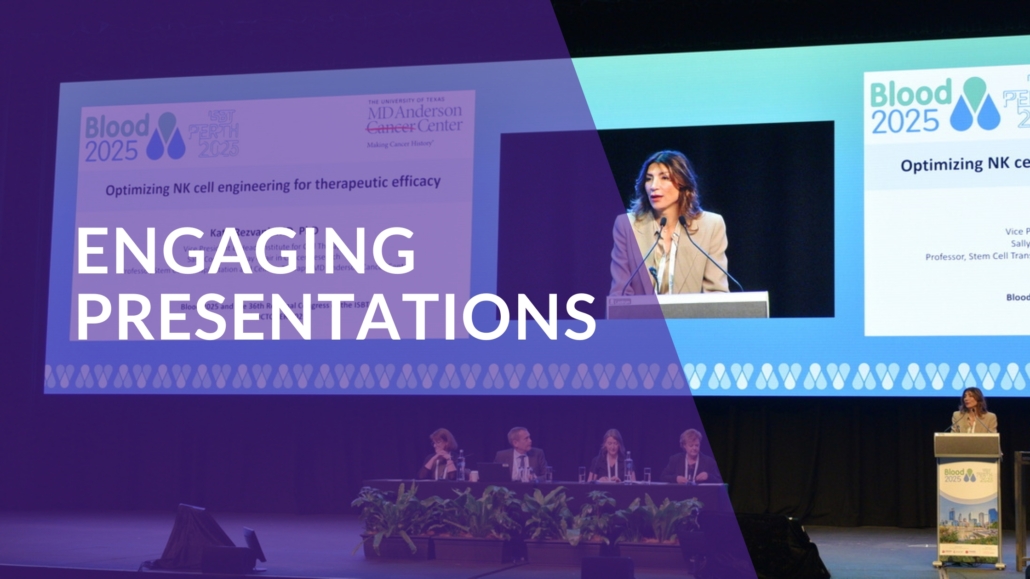
Whether you’re delivering a keynote speech, running a seminar, or doing a panel discussion, it is likely that your top priority is to keep your audience engaged. Without an engaged audience, your messaging simply will not cut through. Luckily there are many ways to make your presentations more engaging.

In addition to using humour, the right body language, and practicing over and over in front of the mirror,  there are a few ways to ensure your presentations grab the attention of your audience and keep them engaged. Here are a few:

Be a storyteller

People engage with things that they can relate to. By telling stories instead of reciting reams of information you can communicate ideas in a personal way. Storytelling can help you connect with your audience on a human level. While storytelling is an effective technique for engaging audiences, it’s important to keep the story relevant to the event theme and purpose so that you can drive your message home.

Make sure the audio is perfect

There’s nothing worse than a speech that doesn’t fill the entire event room. Muffled and delayed audio are two of the biggest culprits in breaking an otherwise great presentation. Working with a professional AV team with state-of-the-art technology can really put your mind at ease leading up to and during your presentation.

Use second screen technology

Smartphones can sometimes be a distraction for people at events. So why not incorporate them into your presentation and make them work for you rather than against you? Second screen technology makes use of people’s smartphones to enhance what is being delivered on the primary event screen. It’s a great way to make your presentation interactive and encourage audiences to connect with your content.

Get the staging right

Styling and staging is what people will see surrounding you during your delivery. In other words it’s like the framing of your presentation. For this reason, the staging should support what your presentation is about. It should reflect the theme of the event and help enhance what you have to say. This can be achieved by installing branded posters, using eye-catching decorations or even positioning yourself strategically on the stage to grab the attention of your audience.

Light it up

If executed well, lighting can make a presentation lively and eye catching, but if it’s executed poorly, it can make it drab or even worse, distract from your presentation. Lighting should help, not hinder your presentation, so make sure the lighting isn’t reflecting in a way that will form a distraction from your delivery – like off the podium, jewellery that you’re wearing, or your glasses! If you’re looking to add that something special to your next event, gobos are one of the most striking, versatile yet affordable lighting options. A gobo is essentially a stencil cut out of glass or metal, that is then positioned between a spotlight and the area you want lit, creating a unique projected shape. A professional lighting team like AVPartners can bring your presentation to life through effective and professional audiovisual.

Be colour conscious

It’s important to consider how the use of colour can create varying experiences during your presentation. Blue for instance, can create a calm atmosphere and is said to promote clear thought, while red can stimulate the mind and promote action.

If you would like help setting up your next presentation for success, contact AVPartners.

For event planners, it’s important to make each of your events unique in order to encourage re-attendance, make your events memorable and promote your event messaging. Here are a few ways you can make every event unique.

Use lighting strategically

Lighting can be used to set your colour scheme, create a certain mood, revitalise guests, bring your theme to life and draw attention to areas within your event space. When used strategically, lighting can breathe life into your event agenda and can impress your guests. To make your event unique through strategic lighting, it’s important to use state-of-the-art technology and work with a team of lighting experts.

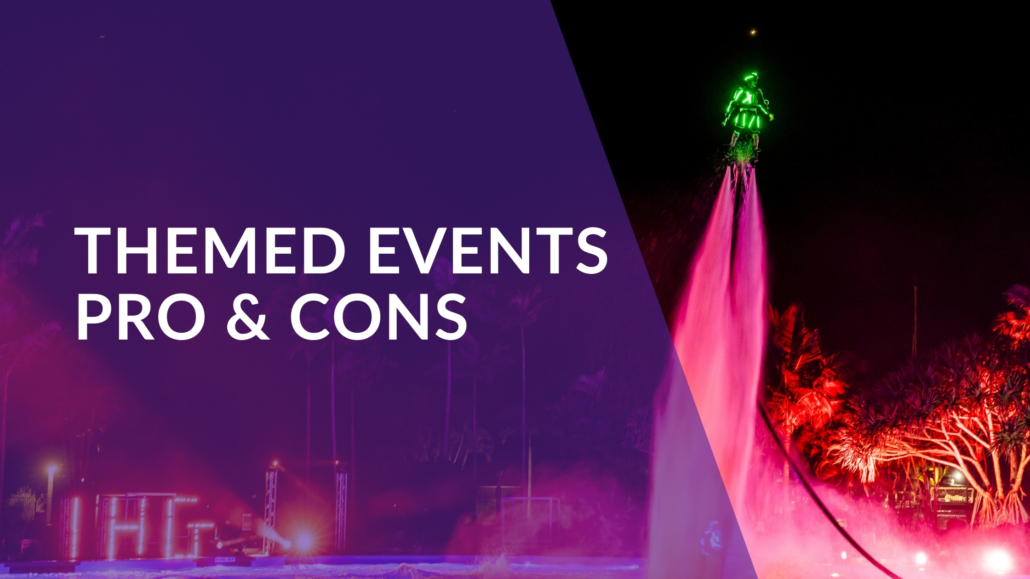
Theme your event

Theming your events is one of the most obvious ways to create a unique experience for guests. A theme is an idea or concept behind your event which can be brought to life through your visual elements, invitations, agenda, marketing, dress code, food and entertainment. By promoting your theme through all aspects of your event, you can make each event experience feel unique for guests.

Prioritise your styling

Styling creates the look and feel of your event. Event styling incorporates furniture, decor, table layouts, props, audiovisual and digital elements. It is one of the most effective ways to set the atmosphere of your event. How would you like your guests to feel at your event? Your styling will help you facilitate a certain event experience to make the day unique.

Hire entertainment

Impressive entertainment can really set your event apart from the rest. By choosing entertainment based on your theme, you can make each event unique. Entertainment doesn’t need to be limited to a musical act. You might consider hiring comedians, puppeteers, magicians, dancers, trapeze artists, balloon artists or DJs.

Incorporate augmented or virtual reality

Augmented reality involves computer-generated interactive elements appearing in the real world, usually viewed through a smartphone, tablet or headset. Virtual reality is a computer-generated experience, most commonly created through the use of a headset, that makes the user feel like they are in a different world. Using technology to create an augmented or virtual reality experience can provide an opportunity to promote your event messaging and branding and can create an exciting and unique experience for your guests.

Work with AVPartners

Through unique styling and exceptional lighting, the AVPartners team can help you put on an event that will wow your guests. Unlike most audiovisual teams who work with different event spaces for each of their events, AVPartners are AV experts in their own venues. The team is able to utilise every aspect and capability of the event space and technology to bring your event to life.

If you would like help making your next event unique through styling and audiovisual production, contact AVPartners today.

Planning an event? You might be considering whether or not to have a theme.

A theme is the idea or concept behind your event that can give the event structure. Having a theme can benefit an event in many ways, but it does come with a few drawbacks. So should your event be themed or themeless?

Benefits of having a theme

It can make your event memorable. A theme can make your event distinctive and memorable for guests. By selecting a theme that is unique and fully committing to it, you can wow your attendees and drive your event message home.

It can help steer your event planning. Having a theme in place can help dictate your event planning decisions. A theme can provide a rough guideline for your event so that you can streamline your planning process.

It can engage your guests. A theme creates a point of difference that will be compelling for your guests. Themed audiovisual elements or a themed dress code will help your guests be fully committed to your event and immersed in the event experience.

It can reinforce your event message. If chosen well, a theme can elevate your event message, help with your branding and make an impact on your guests. In order to enhance your event message, your theme should be chosen with your event objective in mind and at the forefront of your planning process.

The drawbacks of having a theme

It’s not always practical. Events like roundtables and seminars aren’t as well-suited to having a theme as Christmas parties and gala dinners. Information-focused events like these will have focus topics already, so having a theme could distract from the discussion topic at hand.

It can limit your choices. After selecting a theme, your event decisions will be driven by it. While this isn’t alway a problem (it can give you focus and clarity in the planning process), having a theme can make your event decisions more limited.

It might distract from your messaging. If executed well, a theme can help reinforce your event message and key takeaways, but if your theme doesn’t meld with your event objective, it can do the complete opposite. You’ll want your guests to remember your event for its message, not just the theme. So if you think a theme might distract from your message and branding, it’s better to go without.

If you choose to have a themeless event, you can still make an impact through unique styling and a branded colour scheme. Creative lighting and decorations can help deliver your branding and boost your event message.

If you choose to have a theme, you can promote it through your audiovisual elements, dress code, invitations, programs, marketing, decor, entertainment, food and music.  

Stuck for ideas? Here are a few themes that we have coordinated in the past: wild west, roaring 20s, the 80s, the 90s, pop star, masquerade, acrobatic and circus theme, chocolate fantasy, black and gold, global cuisine, the Olympics, and a jungle theme. While a theme should have a strong presence and be consistent across your event, it can be as flexible as you’d like it to be! If you would like help with your next event, contact us today.

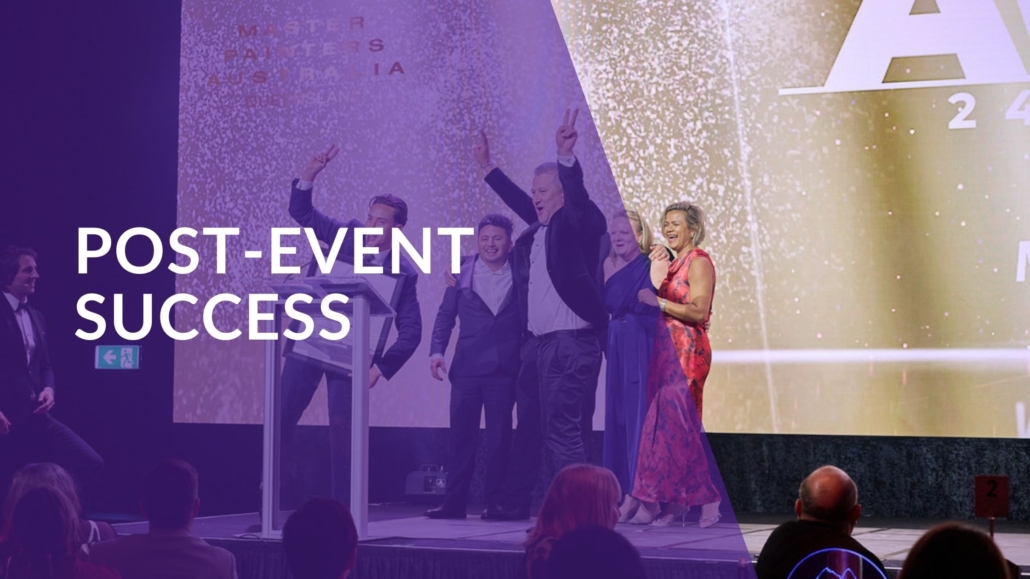
The success of an event doesn’t need to be dictated by what happens on the day alone. Yes, everything should run smoothly on the day, your guests should be engaged and you’ll want to make sure you meet your event objectives. However, an event’s success can extend well beyond the actual day.

Even a successful day can be tainted by a lack of post-event follow up and evaluation. So here’s what you can do to ensure the success of your event after the event itself.

Follow up

Following up with your guests after your event is an important way to let them know that you care about them. A follow up can be as simple as thanking them for attending on your event’s Facebook page or sending an eDM that reinforces your event objectives and says thank you.

Post-event evaluation

Undergoing a post-event evaluation is the best way to analyse what went well and what you can improve on next time. It can help you identify areas where you might be able to tighten up your budget and things you missed that you might like to include in your event next time around.

Feedback surveys

What a post-event evaluation might miss, feedback surveys can make up for. Who better to analyse your event than the event guests themselves? Asking your guests to answer questions about the different aspects of your event can help you to view your event from the perspective of your guests. This type of analysis can really help with improving the event experience at your next event.

Showcasing your event on social media

Social media is one of the best ways to communicate information effectively and efficiently to a wide audience. It is also a great way to show-off your event, boost brand awareness and build anticipation for any upcoming events. Showcasing your event on social media might include sharing footage from the event, developing and sharing an event video that showcases the event’s highlights, or creating and sharing a photo album from the day.

Provide a next-step

Whether it’s on social media or via email marketing, providing a next step for your guests is a great way to keep them engaged with your brand and event. It can also increase the likelihood of guests attending your future events. Provide one simple call-to-action in your communications with guests, for example “Visit our events page to find out what’s coming up” or “Sign up to our mailing list to stay in the loop”.

If you would like to maximise the experience at your next event, contact AVPartners today.

Professionals in neuroscience, interior design and advertising know very well the impact colours can have on our mood and how we experience things. Colours can excite, provoke action and can even encourage concentration. So how can event planners make the most of colour at their events?

While there isn’t one magic colour to use in events that will evoke a positive response from event attendees and make your event memorable, studies have shown that different colours can ignite different emotions in people. So depending on your event objectives, you might want to consider using certain colours to drive home your messaging.

Using colour in your event decor and lighting can influence the way your guests engage with your event and can create a memorable experience. Here’s how colour can make an impact on your event delegates:

Cool colours

Cool colours including blue, green and violet generally have a calming effect on people. Blue is a cool colour that is often used at corporate events. This is no coincidence. The colour blue relaxes people and studies have shown that it can help with focus and concentration. It can stimulate clear thought and put people at ease. Consider using the colour blue in your event decorations to create a calm atmosphere. You can also use blue lighting during event activities to improve guests’ attention spans and encourage concentration. The colour green can have a similar effect on our emotions. It is reminiscent of nature, and can therefore have a soothing effect on people.

Warm colours

Warm colours like red, orange and yellow create feelings of warmth and positivity. These colours remind us of warm weather and carry an energetic feeling with them. Red in particular has been proven to stimulate the mind and enhance our heart rates. It is a colour that can influence us to act. Consider using the colour red to communicate your event messaging throughout your event. It can be used in your event banners, in your decorations or on your screens.

Incorporating colour

Colour can be incorporated into your decorations, stage set and lighting. While the colours used in your design and decorations will be fixed throughout the duration of your event, you can use different coloured lighting throughout your event to enhance and complement any event styling. This helps to create different moods and experiences for your guests. Utilising different colours throughout your event can keep your guests engaged and entertained.

If you would like advice on incorporating colours into your next event, contact AVPartners today.

Hashtags have become an important way for event planners to create a buzz around events. Think of the last conference or event you attended. Chances are a hashtag was used. So what exactly are hashtags and why have they become so popular in the events industry?

A hashtag is a word or phrase preceded by a hash sign (#), which makes it a searchable link. Most commonly used on applications and social media platforms like Twitter, Instagram and Facebook, hashtags give users the ability to organise or ‘file’ online conversations. When a user clicks on a hashtag, they are able to view all other discussions which use the same hashtag.

Why use a hashtag for events?

An effective hashtag can improve the reach of your event. It can help build anticipation surrounding the day, drive more ticket sales and boost awareness for your brand. An event hashtag also helps drive engagement throughout the event itself. Attendees can post about your event using the hashtag to signal that they are part of the conversation about your event.

There are 4 factors that make a great hashtag:

1. Unique

An effective hashtag will be unique to your brand and event. This will ensure that your event and brand doesn’t compete with other unrelated posts which use the same hashtag. Before settling on your hashtag, make sure to do a quick search across social media to make sure it hasn’t been used before. Examples may include #GFWS2018 or #vividtaronga which are time or location specific.

2. Succinct

Short hashtags are effective because they are memorable and get to the point quickly. They also remove room for typo errors, particularly when your event guests will be required to type the hashtag out.

3. Playful

Depending on what you’re trying to achieve, a hashtag which is playful and uses a bit of light humour may do the trick. A good example of this is Red Bull’s #PutACanOnIt campaign. The campaign used the catchy hashtag #PutACanOnIt to encourage people to take photos of their Red Bull cans in interesting locations. This strategy encouraged engagement amongst their audience and successfully created a buzz around the brand.

4. It has no hidden meaning

This is a really important one. Triple check your hashtag before sharing it. Remember, your hashtag will display without breaks between the words, so new words might form in the amalgamation. Check for any embarrassing words or messaging that may have been created. While you will want to build reach, you won’t want to bring attention to your event for the wrong reasons!

Broadcasting your hashtag

To really make the most of your hashtag before, during and after your event, it’s important to include it on all of your promotional materials, and make sure it’s in full view for guests throughout the event. Use audiovisual (AV) technology to keep your hashtag front and centre throughout your event. By projecting your hashtag on your stage, screen or even on the walls of your event space, you can encourage real time conversation about your event on social media. With your hashtag in full view, your event guests will be encouraged to include it in their tweets, live videos and other social posts.

Contact us today to set up the AV at your next event.

We love sharing our tips and ideas when it comes to event planning, and we realised we have a lot of great blog posts that can help.

Take a look at some of our favourite topics that will help you plan your next event:

Choosing a venue

One of the most important aspects when planning an event is where the event will be held. The venue for an event can mean the difference between a successful event, and a mediocre one. Luckily, we have some experience working with awesome venues! Here are our tips for choosing the right venue for your event.

Event styling

Styling an event can be the most exciting part of event planning! This is where you get to choose the look and feel of your event. It’s an important part of the event planning process as it lays the foundation for how guests will experience the event.

Event styling incorporates furniture, decor, colour, centrepieces and table layouts, props, audiovisual and digital elements. It takes your guests on a journey, showcasing your theme, your branding and your ideas.

Budgeting

To effectively plan an event within your budget, consider the benefits of technology. Technology has an important role to play in event planning, and can be used in a variety of ways to help plan, organise, and execute an event while remaining within your event budget.

Social media

When social media is incorporated into an event, it can be hugely impactful and influential, generating immeasurable event awareness before, during and well beyond the event.

There are a number of different ways to incorporate social media into your event; such as using social media to promote your event and having a social media wall at your event to drive engagement.

Catering

Food has a special place at all events; it brings people together in a fun and engaging way, and will give your guests a culinary experience to remember. Stuck on what type of catering is right for your event style and budget? Check out these popular catering types.

The event message

There’s no point holding an event that gives out the wrong or unintended message to guests. Make sure you can effectively communicate your event message loud and clear.

Interested in finding out more about any of these topics or want to get started planning your next event with us? Contact us today!